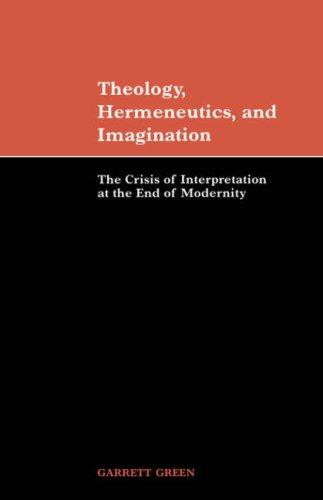
Theology, Hermeneutics, and Imagination
0
0
As an Amazon Associate and affiliate partner, Menrva Books earns from qualifying purchases. Learn more
Author Description
This book explores the contemporary crisis of biblical interpretation by examining modern and postmodern forms of the 'hermeneutics of suspicion'. Garrett Green looks at several thinkers who played key roles in creating a radically suspicious reading of the Bible. After Kant, Hamann, and Feuerbach comes Nietzsche, who marked the turn from modern to postmodern suspicion. Green argues that similarities between Derrida's deconstruction and Barth's theology of signs show that postmodern suspicion ought not to be viewed simply as a threat to theology but as a secular counterpart to its own hermeneutical insights. When theology attends to its proper task of describing the grammar of scriptural imagination, it discovers a source of suspicion more radical than the secular, the hermeneutical expression of God's gracious judgement. Green concludes that Christians are committed to the hermeneutical imperative, the never-ending struggle for the meaning of scripture in the hopeful insecurity of the faithful imagination.
Menrva's Summary
THE THESIS
This book investigates the contemporary crisis in biblical interpretation, particularly the 'hermeneutics of suspicion' that emerged from modern and postmodern thought. Garrett Green examines key thinkers like Kant, Hamann, Feuerbach, Nietzsche, Derrida, and Barth, tracing the development of suspicion towards the Bible. He argues that postmodern deconstruction, exemplified by Derrida, shares hermeneutical insights with theology, particularly Barth's theology of signs, suggesting suspicion is not solely a threat but a secular counterpart to theological understanding. The book posits that theology's proper task of describing the grammar of scriptural imagination reveals a more radical source of suspicion in God's gracious judgment, ultimately committing Christians to an ongoing interpretive struggle within a faithful imagination.
THE SCOPE MAP
- Analysis of modern and postmodern 'hermeneutics of suspicion' in relation to biblical interpretation.
- Examination of key thinkers including Kant, Hamann, Feuerbach, Nietzsche, Derrida, and Barth.
- Exploration of the parallels between Derrida's deconstruction and Barth's theology of signs.
- Argument that postmodern suspicion can be a hermeneutical insight for theology.
- Discussion of theology's role in describing the grammar of scriptural imagination.
- Identification of God's gracious judgment as a radical source of suspicion.
- Conclusion on the Christian commitment to the hermeneutical imperative and faithful imagination.
THE AUTHORITY PERSPECTIVE
The book is presented as a scholarly examination of complex theological and philosophical concepts surrounding biblical interpretation. It engages with critical theory and postmodern thought to re-evaluate traditional hermeneutical approaches. The author's argument suggests a nuanced perspective on the relationship between secular suspicion and theological insight, positioning the latter as potentially more radical. The work appears geared towards an academic audience interested in the intersection of theology, philosophy, and literary theory.
Page Count:
241
Publication Date:
2009-01-01
ISBN-10:
0521045312
ISBN-13:
9780521045315
Non-Fiction
Religion
Philosophy
Hermeneutics
Postmodernism
Theology
Community Tags
Similar Books