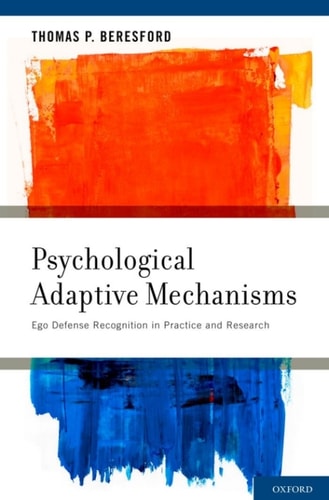
Psychological Adaptive Mechanisms: Ego Defense Recognition in Practice and Research
0
0
As an Amazon Associate and affiliate partner, Menrva Books earns from qualifying purchases. Learn more
Author Description
This book will demonstrate how to use novel, systematic method for recognizing psychological adaptive mechanisms (known in psychoanalytic theory as ego defenses) in clinical encounters. This clinical method is based in published theoretical and empirical studies of these mechanisms over the past 14 years as well as working with successive classes of mental health trainees of varying disciplines at the University of Colorado. The result is an approach that trainees both apprehend and find useful. This work will offer the mental health disciplines, and even wider audiences, a platform both for 1) clinical use in everyday practice, 2) continuing clinical studies of adaptive psychology as well as 3) direct application of psychological adaptive mechanisms theory in clinical research that will improve the diagnosis and treatment of persons with mental or emotional disorders.This an important empirical model for understanding how humans adapt to the stressful experiences of their lives. They have developmental, biological, and evolutionary significance and all of these will be discussed in the book. Psychological Adaptive Mechanisms are observable behaviors that range on a developmental hierarchy from the Primitive defenses of normal early childhood and of major mental illness in adults, through the Mature defenses of fully functioning adulthood. They also serve to limit and to direct the human anxiety response, giving the "fight or flight" reaction to threat many more than those two classically described behavioral options.These mechanisms are likely transduced by the brain and, in providing wider ranges of adaptive behavior, most probably reflect an evolutionary selection towards greater flexibility of adaptation.
Menrva's Summary
THE THESIS
This book investigates the systematic identification and clinical application of psychological adaptive mechanisms, commonly known as ego defenses, to improve diagnostic accuracy and treatment outcomes. Dr. Thomas P. Beresford, drawing on over a decade of empirical research and his experience training mental health professionals at the University of Colorado, presents a structured framework for recognizing these behaviors. The text argues that these mechanisms are not merely theoretical constructs but observable, biologically and evolutionarily significant responses that allow humans to navigate stressful experiences with greater behavioral flexibility.
THE SCOPE MAP
What You Will Find
- A developmental hierarchy of defenses ranging from primitive childhood behaviors to mature adult functioning.
- A systematic clinical methodology for identifying adaptive mechanisms during patient encounters.
- Analysis of the biological and evolutionary underpinnings of the human anxiety response.
- Practical applications for integrating adaptive mechanism theory into both clinical practice and formal research.
THE AUTHORITY PERSPECTIVE
Experts and clinicians recognize this work as a practical bridge between abstract psychoanalytic theory and observable clinical behavior. Readers frequently note the clarity of the author's pedagogical approach, which makes complex psychological concepts accessible to trainees and experienced practitioners alike.
Page Count:
338
Publication Date:
2012-01-01
Publisher:
Oxford University Press
ISBN-10:
0199794502
ISBN-13:
9780199794508
Psychology
Medical
Psychiatry
Allied Health
Psychoanalysis
Mental Health
Community Tags
Similar Books