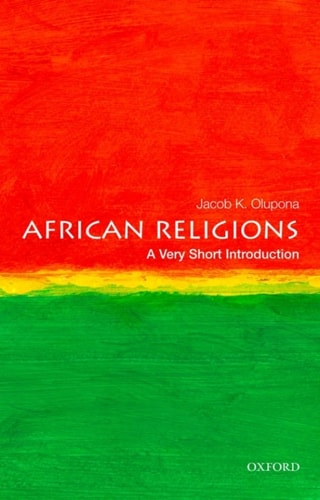
African Religions: A Very Short Introduction
0
0
As an Amazon Associate and affiliate partner, Menrva Books earns from qualifying purchases. Learn more
Author Description
What are African religions? African Religions: A Very Short Introduction answers this question by examining primarily indigenous religious traditions on the African continent, as well as exploring Christianity and Islam. It focuses on the diversity of ethnic groups, languages, cultures, and worldviews, emphasizing the continent's regional diversity. Olupona examines a wide range of African religious traditions on their own terms and in their social, cultural, and political contexts. For example, the book moves beyond ethnographic descriptions and interpretations of core beliefs and practices to look at how African religion has engaged issues of socioeconomic development and power relations. Olupona examines the myths and sacred stories about the origins of the universe that define ethnic groups and national identities throughout Africa. He also discusses spiritual agents in the African cosmos such as God, spirits, and ancestors. In addition to myths and deities, Olupona focuses on the people central to African religions, including medicine men and women, rainmakers, witches, magicians, and divine kings, and how they serve as authority figures and intermediaries between the social world and the cosmic realm. African Religions: A Very Short Introduction discusses a wide variety of religious practices, including music and dance, calendrical rituals and festivals, celebrations for the gods' birthdays, and rituals accompanying stages of life such as birth, puberty, marriage, elderhood, and death. In addition to exploring indigenous religions, Olupona examines the ways Islam and Christianity as outside traditions encountered indigenous African religion. He shows how these incoming faith traditions altered the face and the future of indigenous African religions as well as how indigenous religions shaped two world religions in Africa and the diaspora.Olupona draws on archaeological and historical sources, as well as ethnographic materials based on fieldwork. He shows that A
Menrva's Summary
THE THESIS
How do indigenous religious traditions, alongside Christianity and Islam, shape the complex cultural and political landscape of the African continent? Jacob K. Olupona, a professor of African religious traditions, utilizes a synthesis of archaeological data, historical records, and extensive ethnographic fieldwork to analyze these belief systems. He argues that African religions are not static relics but dynamic forces that actively engage with socioeconomic development, power structures, and the formation of national identities.
THE SCOPE MAP
What You Will Find
- Analysis of indigenous spiritual agents including God, spirits, and ancestral figures.
- Examination of the intersection between indigenous practices and the arrival of Islam and Christianity.
- Exploration of ritual life, including music, dance, and life-cycle ceremonies from birth to death.
- Investigation of the roles of religious intermediaries such as medicine men, rainmakers, and divine kings.
THE AUTHORITY PERSPECTIVE
Scholars and students frequently cite this work as a concise, accessible entry point for understanding the vast diversity of African spiritual life. Experts highlight the author's ability to balance academic rigor with a clear, introductory framework suitable for both classroom use and general inquiry.
Page Count:
176
Publication Date:
2014-01-01
Publisher:
Oxford University Press
ISBN-10:
0199790787
ISBN-13:
9780199790784
History
Religion
Sociology
Agnosticism
Anthropology
Buddhism
Africa
Community Tags
Similar Books