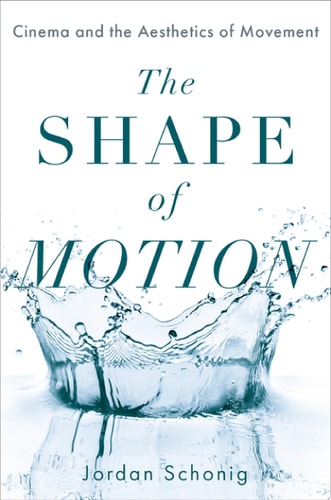
The Shape of Motion: Cinema and the Aesthetics of Movement
0
0
As an Amazon Associate and affiliate partner, Menrva Books earns from qualifying purchases. Learn more
Author Description
In The Shape of Motion: Cinema and the Aesthetics of Movement, author Jordan Schonig provides a new way of theorizing cinematic motion by examining cinema's "motion forms": structures, patterns, or shapes of movement unique to the moving image. From the wild and unpredictable motion of flickering leaves and swirling dust that captivated early spectators, to the pulsing abstractions that emerge from rapid lateral tracking shots, to the bleeding pixel-formations caused by the glitches of digital video compression, each motion form opens up the aesthetics of movement to film theoretical inquiry. By pairing close analyses of onscreen movement in narrative and experimental films with concepts from Maurice Merleau-Ponty, Henri Bergson, and Immanuel Kant, Schonig rethinks longstanding assumptions within film studies, such as indexical accounts of photographic images and analogies between the camera and the human eye. Arguing against the intuition that cinema reproduces our natural perception of motion, The Shape of Motion shows how cinema's motion forms do not merely transpose the movements of the world in front of the camera, they transform them.
Menrva's Summary
THE THESIS
How do cinematic motion forms—distinct patterns of movement unique to the moving image—reconfigure our understanding of film aesthetics and perception? Jordan Schonig, a scholar in film and media studies, utilizes a framework grounded in phenomenology and continental philosophy to challenge traditional indexical theories of cinema. By analyzing diverse examples ranging from early cinema to digital glitches, he argues that film does not merely record reality but actively transforms movement into unique aesthetic structures.
THE SCOPE MAP
What You Will Find
- Analysis of motion forms including flickering, swirling, lateral tracking, and digital compression artifacts.
- Theoretical integration of concepts from Maurice Merleau-Ponty, Henri Bergson, and Immanuel Kant.
- Comparative studies of narrative and experimental film sequences.
Scope Limits
- The text does not provide a comprehensive history of cinematic technology or camera mechanics.
- It does not focus on the sociological or industrial impacts of film production.
THE AUTHORITY PERSPECTIVE
Scholars and film theorists recognize this work as a significant contribution to the study of cinematic ontology and the aesthetics of the moving image. Readers frequently note the academic density of the prose, which requires a foundational understanding of film theory and continental philosophy to fully engage with the author's arguments.
Page Count:
264
Publication Date:
2021-01-01
Publisher:
Oxford University Press
ISBN-10:
0190093919
ISBN-13:
9780190093914
Philosophy
Aesthetics
Media Studies
Film Theory
Film Studies