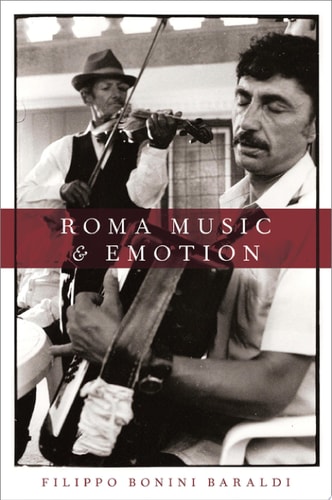
Roma Music and Emotion
0
0
As an Amazon Associate and affiliate partner, Menrva Books earns from qualifying purchases. Learn more
Author Description
By Combining Long-term Field Research With Hypotheses From The Cognitive Sciences, This Book Proposes A Groundbreaking Anthropological Theory On The Emotional Power Of Music. It Highlights A Human Tendency To Engage In Empathic Relations Through And With The Musical Artefacts, Veritable Sonic Agents For Which We Can Fell Pity, Compassion, Or Sympathy. The Theory Originates From A Detailed Ethnography Of The Musical Life Of A Small Roma Community Of Transylvania (romania), Where Filippo Bonini Baraldi Lived Several Years, Seeking An Answer To Intriguing Questions Such As: Why Do The Roma Cry While Playing Music? What Lies Behind Their Ability To Move Their Customers? What Happens When Instrumental Music And Wailing Voices Come Together At Funerals? Through The Analysis Of Numerous Weddings, Funeral Wakes, Community Celebrations And Intimate Family Gatherings, The Author Shows That Music And Weeping Go Hand In Hand, Revealing Fundamental Tensions Between Unity And Division, Life And Death, The Self And The Others. Tensions That The Roma Enhance, Overemphasize And Perceive As Central To Their Identity. In Addition To Improve Our Understanding Of A Community Still Shrouded In Stereotypes, This Book Is An Important Contribution For Research On Musical Emotion, Which Thus Far Has Focused Almost Exclusively On Western Classical Music--
Menrva's Summary
THE THESIS
This book investigates the intersection of music and emotional expression by proposing an anthropological theory on the power of music to facilitate empathy. Filippo Bonini Baraldi, an ethnomusicologist, utilizes his extensive field research within a Roma community in Transylvania to bridge the gap between cultural ethnography and cognitive science. He argues that musical artifacts function as active agents that elicit complex emotional responses, such as compassion and sympathy, thereby challenging existing musicological frameworks that prioritize Western classical traditions.
THE SCOPE MAP
What You Will Find
- Ethnographic analysis of musical practices in a Transylvanian Roma community
- Theoretical framework integrating cognitive science with anthropological observation
- Detailed accounts of weddings, funeral wakes, and family gatherings
Scope Limits
- The study is geographically and culturally limited to a specific Roma community in Romania
- The research does not provide a universal theory applicable to all global musical traditions
THE AUTHORITY PERSPECTIVE
Scholars in the field of ethnomusicology recognize this work as a significant departure from traditional music research by centering non-Western emotional expressions. Readers frequently note the academic density of the prose, which effectively synthesizes complex cognitive theories with intimate ethnographic detail.
Page Count:
363
Publication Date:
2021-01-01
Publisher:
Oxford University Press
ISBN-10:
0190096810
ISBN-13:
9780190096816
Sociology
Humanities
Anthropology
Cultural Anthropology
Roma Studies
Criticism history
Musicology
Community Tags
Similar Books