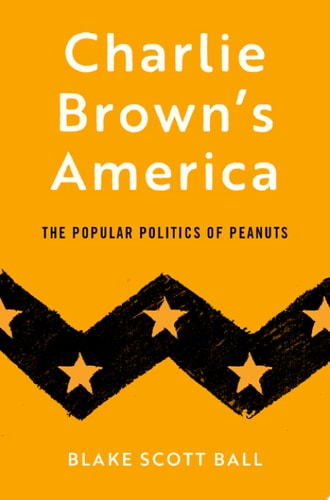
Charlie Brown's America: The Popular Politics of Peanuts
0
0
As an Amazon Associate and affiliate partner, Menrva Books earns from qualifying purchases. Learn more
Author Description
Despite--or because of--its huge popular culture status, Peanuts enabled cartoonist Charles Schulz to offer political commentary on the most controversial topics of postwar American culture through the voices of Charlie Brown, Snoopy, and the Peanuts gang.In postwar America, there was no newspaper comic strip more recognizable than Charles Schulz's Peanuts. It was everywhere, not just in thousands of daily newspapers. For nearly fifty years, Peanuts was a mainstay of American popular culture in television, movies, and merchandising, from the Macy's Thanksgiving Day Parade to the White House to the breakfast table.Most people have come to associate Peanuts with the innocence of childhood, not the social and political turmoil of the 1960s and 1970s. Some have even argued that Peanuts was so beloved because it was apolitical. The truth, as Blake Scott Ball shows, is that Peanuts was very political. Whether it was the battles over the Vietnam War, racial integration, feminism, or the future of a nuclear world, Peanuts was a daily conversation about very real hopes and fears and the political realities of the Cold War world. As thousands of fan letters, interviews, and behind-the-scenes documents reveal, Charles Schulz used his comic strip to project his ideas to a mass audience and comment on the rapidly changing politics of America.Charlie Brown's America covers all of these debates and much more in a historical journey through the tumultuous decades of the Cold War as seen through the eyes of Charlie Brown, Lucy, Linus, Peppermint Patty, Snoopy and the rest of the Peanuts gang.
Menrva's Summary
THE THESIS
This book investigates the extent to which Charles Schulz utilized his comic strip, Peanuts, as a vehicle for political commentary during the volatile decades of the Cold War. Blake Scott Ball, a historian of American culture, examines archival fan correspondence, personal interviews, and production documents to challenge the perception that the strip was apolitical. He argues that the characters served as proxies for Schulz to engage with the pressing social anxieties of the era, including the Vietnam War, civil rights, and gender roles.
THE SCOPE MAP
What You Will Find
- Analysis of the intersection between mass media and Cold War political discourse.
- Examination of specific strips addressing nuclear anxiety, racial integration, and feminism.
- Historical context regarding the evolution of the comic strip industry in the 20th century.
Scope Limits
- The text does not provide a comprehensive biography of Charles Schulz outside of his professional output.
- It does not analyze the artistic evolution of the strip's visual style, focusing instead on thematic content.
THE AUTHORITY PERSPECTIVE
Scholars and cultural critics recognize this work as a significant contribution to the study of mid-century American media. Readers frequently note the academic rigor of the research, which successfully reframes a familiar cultural icon within a serious historical context.
Page Count:
253
Publication Date:
2021-01-01
Publisher:
Oxford University Press
ISBN-10:
0190090480
ISBN-13:
9780190090487
Biography
History
Humor
Journalism
American Studies
English
Mass Communication
English & College Success
Minority Studies
American History
Comics
History of the Americas
Modern History
Community Tags
Similar Books