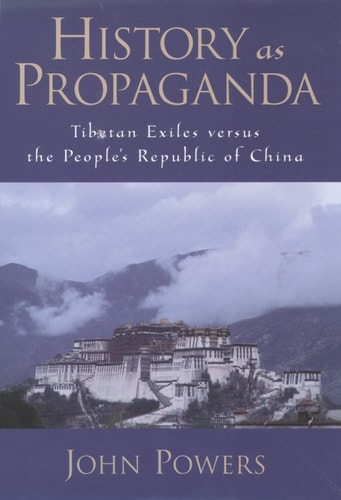
History as Propaganda: Tibetan Exiles versus the People's Republic of China
0
0
As an Amazon Associate and affiliate partner, Menrva Books earns from qualifying purchases. Learn more
Author Description
Despite Chinese efforts to stop foreign countries from granting him visas, the Dalai Lama has become one of the most recognizable and best loved people on the planet, drawing enormous crowds wherever he goes. By contrast, China's charismatically-challenged leaders attract crowds of protestors waving Tibetan flags and shouting "Free Tibet!" whenever they visit foreign countries. By now most Westerners probably think they understand the political situation in Tibet. But, John Powers argues, most Western scholars of Tibet evince a bias in favor of one side or the other in this continuing struggle. Some of the most emotionally charged rhetoric, says Powers, is found in studies of Tibetan history. narratives.
Menrva's Summary
THE THESIS
This book investigates how competing historical narratives regarding Tibet are utilized as political tools by both the Tibetan exile community and the People's Republic of China to legitimize their respective claims. John E. Powers, a scholar of Asian religions and Tibetan studies, examines the rhetorical strategies employed by both sides to influence international perception. By analyzing the construction of historical memory, he argues that much of what is presented as objective history is actually a form of partisan propaganda designed to serve specific political agendas.
THE SCOPE MAP
What You Will Find
- Comparative analysis of Tibetan exile and Chinese government historical narratives
- Examination of historiographical bias in Western academic studies of Tibet
- Evaluation of political rhetoric and propaganda techniques in international discourse
- Case studies on the construction of national identity and legitimacy
THE AUTHORITY PERSPECTIVE
Experts recognize this work as a critical contribution to the study of modern Tibetan history and political discourse. Readers frequently note the academic rigor of the text and its objective approach to a highly polarized subject.
Page Count:
223
Publication Date:
2004-01-01
Publisher:
Oxford University Press
ISBN-10:
0199883971
ISBN-13:
9780199883974
Religion
History
International relations
Special Topics
Tibetans
Historiography
Tibet China
China
Tibet
Community Tags
Similar Books