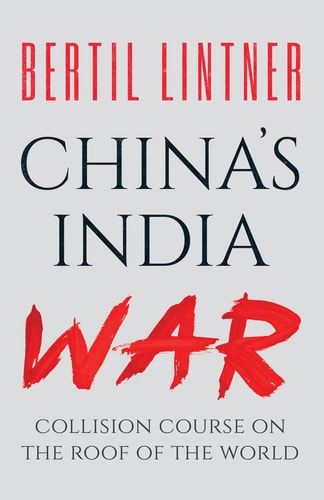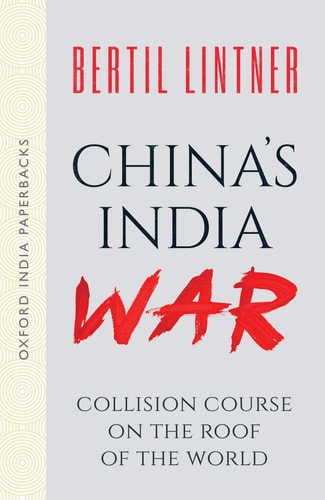
China's India War: Collision Course on the Roof of the World
0
0
As an Amazon Associate and affiliate partner, Menrva Books earns from qualifying purchases. Learn more
Author Description
The first book to put the Sino-Indian border dispute and the 1962 war into its rightful historical and geopolitical context, China's India War examines how the 1962 war was about much more than the border. China was going through immense internal turmoil following the disastrous 'Great Leap Forward' and Mao Zedong, the architect of the movement, was looking to reassert his power over the Communist Party and the People's Liberation Army. Finding an outside enemy against which everyone could unite was his best option. Coincidentally, India was emerging as the leader of the newly independent countries in Asia and Africa and the stakes were high for a war with India: winning the war could mean China would 'dethrone' India and take over. A border dispute with India and India's decision to grant asylum to the Dalal Lama after a failed uprising against Chinese rule in Tibet in 1959 gave China legitimate reasons to go to war. This book unveils how China has started planning the war as early as in 1959, much before Jawaharlal Nehru launched the 'forward policy' in the border areas. And how the war accomplished much for China: India lost, China became the main voice of revolutionary movements in the Third World, and Mao Zedong was back in power.
Menrva's Summary
THE THESIS
This book investigates the 1962 Sino-Indian War as a calculated geopolitical maneuver by Mao Zedong to consolidate internal power rather than a simple territorial border dispute. Bertil Lintner, a veteran journalist and expert on Asian affairs, utilizes historical records and political analysis to argue that the conflict was a strategic necessity for Mao following the failure of the Great Leap Forward. The text frames the war as a deliberate effort to neutralize India's rising influence in the Third World and reassert Chinese dominance in the region.
THE SCOPE MAP
What You Will Find
- Historical analysis of the 1959 Tibetan uprising and the Dalai Lama's asylum in India.
- Examination of internal Chinese political dynamics during the post-Great Leap Forward era.
- Evaluation of the 'forward policy' initiated by Jawaharlal Nehru.
- Geopolitical assessment of the competition for leadership among newly independent nations in Asia and Africa.
Scope Limits
- The book does not provide a minute-by-minute tactical account of individual military skirmishes.
- It does not focus on the post-1962 diplomatic relations between the two nations beyond the immediate aftermath of the war.
THE AUTHORITY PERSPECTIVE
Experts and historians recognize this work as a critical contribution to understanding the political motivations behind the 1962 conflict. Readers frequently note the clarity of the author's geopolitical arguments and the accessibility of the historical context provided.
Page Count:
352
Publication Date:
2020-12-01
Publisher:
Oxford University Press
ISBN-10:
0190125047
ISBN-13:
9780190125042
History
India
International relations
Asia history
Asian History
China
Geopolitics
Military History