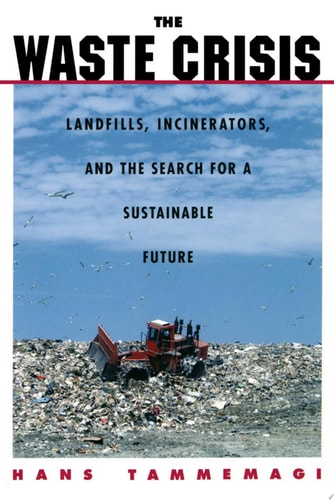
The Waste Crisis: Landfills, Incinerators, and the Search for a Sustainable Future
0
0
As an Amazon Associate and affiliate partner, Menrva Books earns from qualifying purchases. Learn more
Author Description
As populations continue to increase, society produces more and more waste. Yet it is becoming increasingly difficult to build new landfills, and the existing landfills are causing significant environmental damage. Finding solutions is not simple; the problem is enormous in size, vital in terms of its impact on the environment, and complex in scope. This book provides a vast look at solid waste management in North America and seeks solutions to the waste crisis. It describes the magnitude and complexity of the problem, focusing on municipal wastes and placing them in the perspective of other wastes such as hazardous, biochemical, and radioactive debris. It describes the components of an integrated waste management program, including recycling, composting, landfills, and waste incinerators, and it presents in detail the scientific and engineering principles underlying these technologies. To illustrate both the problems and solutions of waste management programs, the authors provide seven case histories, among them the Fresh Kills (Staten Island, New York), the East Carbon Landfill (Utah), and the Lancaster County Municipal Waste Incinerator (Pennsylvania). The Waste Crisis is unique in its attempt to analyze waste management in a broader societal context and to propose solutions based on basic principles. And by doing so, it encourages readers to challenge commonly held perceptions and to seek new and better ways of dealing with waste. As such, this book deserves a place on the bookshelf of anyone who deals with or feels the need to confront the growing problems of waste management.
Menrva's Summary
THE THESIS
This book investigates the escalating global challenge of municipal solid waste management and the urgent necessity for sustainable technological and societal solutions. Hans Y. Tammemagi, an expert in environmental science and waste management, utilizes a combination of technical engineering principles and broad societal analysis to address the limitations of current disposal methods. The text argues that the crisis is not merely a logistical hurdle but a complex systemic issue requiring an integrated approach that balances environmental safety with modern consumption patterns. By examining the lifecycle of waste, the author provides a framework for understanding how landfills, incinerators, and recycling programs function within a larger ecological context.
THE SCOPE MAP
What You Will Find
- Detailed scientific and engineering principles governing modern waste disposal technologies.
- Comparative analysis of municipal, hazardous, biochemical, and radioactive waste streams.
- Seven comprehensive case studies including Fresh Kills, East Carbon Landfill, and the Lancaster County Municipal Waste Incinerator.
- An integrated management framework covering recycling, composting, and thermal treatment strategies.
THE AUTHORITY PERSPECTIVE
Experts and practitioners in the field of environmental engineering frequently cite this work as a foundational text for understanding the technical complexities of waste management. Readers often note the balance between accessible prose and the rigorous scientific detail required to evaluate modern disposal infrastructure.
Page Count:
283
Publication Date:
1999-01-01
Publisher:
Oxford University Press
ISBN-10:
0199880913
ISBN-13:
9780199880911
Incinerators
Public Policy
Engineering
Environmental
Sustainability
Trades & Technology
Community Tags
Similar Books