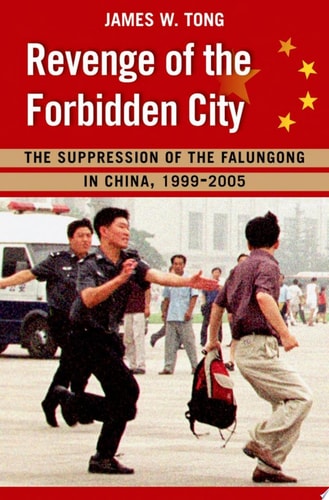
Revenge of the Forbidden City: The Suppression of the Falungong in China, 1999-2005
0
0
As an Amazon Associate and affiliate partner, Menrva Books earns from qualifying purchases. Learn more
Author Description
The Falungong movement originated in 1992 as a system of breathing exercises designed to promote health and well-being. Riding on the coattails of the qigong fever that swept through China, it attracted an extensive following until 1994, when the Chinese government suppressed the qigong movement. A series of protest rallies by Falungong organizations against local government repression set in motion an upward conflict spiral that culminated in the siege of the Party headquarters in Beijing on April 25, 1999, by more than 20,000 Falungong practitioners. Revenge of the Forbidden City begins with the shock of the Politburo against such insolent defiance, resolving to retaliate against the Falungong, a retaliation that represented "the most serious political incident" since the Tiananmen upheaval in 1989. James W. Tong reveals how the Chinese government's relentless, sustained repression of the Falungong movement typifies its response towards perceived internal threats. Though many claim that the Democratic reforms in China have eroded the government's ability to monitor and control its citizens, the success of the campaign to eradicate Falungong indicates otherwise: the government effectively implemented a multifaceted offensive involving unsparing suppression, pervasive propaganda, and coercive conversion. The successful execution of this complex campaign reveals the resilience of China's authoritarian institutions. Using empirical evidence and thorough analysis, Tong reveals the Chinese state's formidable ability to crush dissent and provides a cogent rebuttal to those who claim that the Communist government is on the verge of collapse. The definitive account of China's response to Falungong, Revenge of the Forbidden City is essential for any scholar interested in how the Chinese state actually operates.
Menrva's Summary
THE THESIS
This book investigates how the Chinese state successfully implemented a systematic, multifaceted campaign to eradicate the Falungong movement between 1999 and 2005. James W. Tong, a scholar of Chinese politics, utilizes empirical data and institutional analysis to examine the mechanisms of authoritarian control. He argues that the state's ability to suppress internal dissent remains robust, challenging theories that suggest democratic reforms have weakened the government's capacity for social monitoring and coercion.
THE SCOPE MAP
What You Will Find
- A detailed timeline of the conflict between the Chinese government and Falungong practitioners from 1999 to 2005.
- Analysis of the state's three-pronged strategy: unsparing suppression, pervasive propaganda, and coercive conversion.
- Empirical evidence regarding the resilience of authoritarian institutions in the face of perceived internal threats.
- A critical evaluation of the government's capacity to monitor and control its citizenry despite modern economic and political shifts.
THE AUTHORITY PERSPECTIVE
Experts recognize this work as a foundational study on the mechanics of state repression in contemporary China. Readers frequently note the academic density of the prose and the author's rigorous reliance on primary source documentation to support his conclusions.
Page Count:
288
Publication Date:
2009-01-01
Publisher:
Oxford University Press
ISBN-10:
0199888523
ISBN-13:
9780199888528
Religion
History
Comparative Politics
China
Special Topics
Human rights
Sociology
China religion
Community Tags
Similar Books