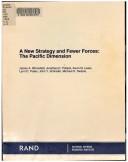
A New Strategy and Fewer Forces
0
0
As an Amazon Associate and affiliate partner, Menrva Books earns from qualifying purchases. Learn more
Author Description
This report considers how the United States should reposture its forces, adjust its policies, and change its military operations in the Asia-Pacific region, all in the context of reduced resources and increased burden-sharing by allies and security partners. It assesses six alternative U.S. regional force postures that might develop over the next 15 years. Each posture is examined from three perspectives: (1) regional responses to the posture, (2) performance in hypothetical contingencies if deterrence fails; and (3) comparative cost. The analysis indicates that the base force posture reflected in the current Future Year Defense Plan is probably the best compromise now for sufficient reassurance of U.S. security partners, deterrence of possible opponents, adequate performance in representative contingencies, and acceptable cost. If threats and uncertainties decline markedly, somewhat lower postures would be acceptable. Risks start to increase rapidly at postures below the base force level. The authors recommend a variety of threat reduction, posture enhancement, and hedging measures.
Menrva's Summary
THE THESIS
This report investigates how the United States can best reposition its military forces and adapt its policies in the Asia-Pacific region amidst declining resources and increased allied contributions. It evaluates six potential U.S. force postures for the next 15 years, analyzing regional reactions, performance in hypothetical conflicts, and associated costs. The current Future Year Defense Plan's base force posture emerges as the most balanced approach for reassuring allies, deterring adversaries, ensuring adequate performance, and managing costs.
THE SCOPE MAP
- Analysis of six alternative U.S. regional force postures over the next 15 years.
- Assessment of regional responses to each proposed force posture.
- Evaluation of performance in hypothetical contingencies if deterrence fails.
- Comparative cost analysis of each force posture.
- Examination of the current Future Year Defense Plan's base force posture.
- Consideration of reduced resources and increased burden-sharing by allies.
- Recommendations for threat reduction, posture enhancement, and hedging measures.
THE AUTHORITY PERSPECTIVE
The analysis presented in this report suggests that the current base force posture offers the optimal balance for U.S. strategy in the Asia-Pacific, prioritizing reassurance, deterrence, and cost-effectiveness. It posits that significant reductions below this level would introduce unacceptable risks. The report's focus on alternative postures and their implications for regional stability and defense spending provides a framework for future strategic planning.
Page Count:
0
Publication Date:
1992-01-01
ISBN-10:
0833012258
History
Politics
Non-Fiction
Geopolitics
Military Strategy
Defense Policy
Community Tags
Similar Books