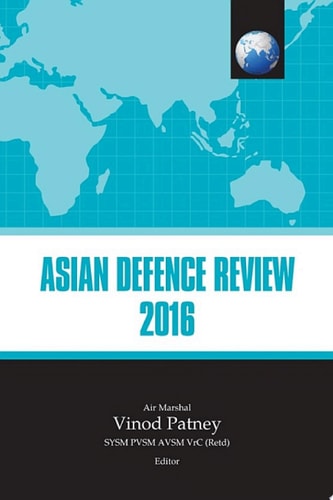
Asian Defence Review 2016
0
0
As an Amazon Associate and affiliate partner, Menrva Books earns from qualifying purchases. Learn more
Author Description
Last year, the war in Syria became a melee––the US, Russia, NATO, Saudi Arabia, Iran, Turkey, Lebanon and some others struggled to bring peace to the region. But each stakeholder hankered after a different end state––President Bashar al-Assad's continuance in power became a contentious issue. In due course of time Syria and the Islamic State in Syria (ISIS) jumped the order of priorities for the US forces in the area. In importance, they have left behind the drawdown in Afghanistan, which has been back-burnered provisionally. As it appears, garnering the support of the countries of the region like India, Japan, South Korea, the Philippines, etc. to counter the rise of China, will continue to be high on the US agenda. Likewise, lifting of sanctions against Iran, following its rapprochement with the West will influence the world in many ways. The fallout of the testing of the hydrogen bomb by North Korea, the South China Sea imbroglio and Indo-Pak relations in the wake of the Pathankot terror strike too will cast their shadows on the geo-politics of the region in 2016.Evading war and conflict in the prevailing environment is an effort; economic interests and geo-political compulsions make the choice of alignment difficult for peace-loving nations of the world. They are faced with the dilemma of evading armed conflicts. It requires a conscious and sustained effort to do so. In order to work towards such goals, it is necessary to look at the geo-political, security and military-related issues objectively. The Centre for Air Power Studies (CAPS) has been publishing the Asian Defence Review to fulfill this need.This volume, a resource base for both the professional and general readers, is the ninth in the series under this title. It aims to add to the pool of information and knowledge in the current strategic discourse dealing with military strategy, defence, politics and trends in military capabilities that impact Asia. In particular, it covers some of the important i
Menrva's Summary
THE THESIS
The 2016 Asian Defence Review examines the complex geopolitical landscape of Asia, focusing on the conflicts and strategic realignments that shaped the region. The volume addresses the Syrian war's multi-stakeholder complexities, the shifting priorities of US forces, and the global influence of Iran's sanctions relief. It also analyzes the impact of North Korea's nuclear tests, the South China Sea disputes, and India-Pakistan relations on regional stability. The Centre for Air Power Studies (CAPS) publishes this annual review to provide objective analysis of geo-political, security, and military trends impacting Asia.
THE SCOPE MAP
- Analysis of the Syrian conflict and its international implications.
- Assessment of US strategic priorities in Asia and Afghanistan.
- Impact of Iran's nuclear deal and sanctions relief on global politics.
- Geopolitical consequences of North Korea's hydrogen bomb testing.
- The South China Sea imbroglio and its effect on regional security.
- Analysis of Indo-Pak relations in the context of the Pathankot terror strike.
- Discussion on the challenges of evading war and conflict in the current environment.
- Trends in military capabilities and defense policy across Asia.
THE AUTHORITY PERSPECTIVE
This ninth volume in the Asian Defence Review series aims to serve as a comprehensive resource for professionals and general readers interested in the strategic discourse surrounding Asia. It provides a detailed examination of military strategy, defense policy, and evolving military capabilities within the region. The review offers objective insights into the geopolitical and security challenges faced by Asian nations, contributing to a deeper understanding of the complex dynamics at play in 2016. The publication seeks to inform discussions on maintaining peace amidst competing interests and potential conflicts.
Page Count:
272
Publication Date:
2016-05-15
Publisher:
KW Publishers
ISBN-10:
9386147009
ISBN-13:
9789386147004
Non-Fiction
History
Politics
Asian Studies
Military Strategy
Geopolitics
Defense Policy
Community Tags
Other Editions(2)
Similar Books











Reader Comments
Share Your Thoughts
No comments yet. Be the first to share your thoughts!