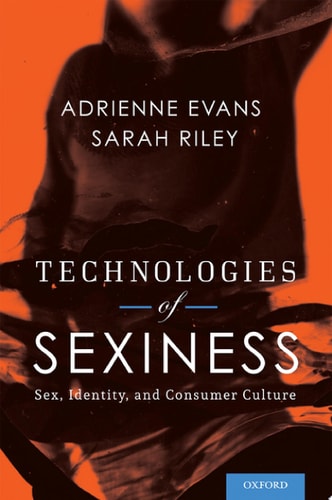
Technologies of Sexiness: Sex, Identity, and Consumer Culture
Author Description
Key cultural shifts have enabled a "new sexualization" of women. Neoliberal, consumerist, and postfeminist media culture have shaped ways of understanding female sexuality, embodied by the figure of the choosing, empowered, entrepreneurial consumer citizen-woman, whose economic capital determines feminine success (and failure). Informed by older constructs of privilege such as class, sexuality, race and (dis)ability, this version of sexiness also constrains by folding contemporary femininity back into previous panics about youth, excess, "bad" consumption, and appropriate feminine behaviorIn Technologies of Sexiness, Adrienne Evans and Sarah Riley identify how current understandings of sexiness in public life and academic discourse have produced a "doubled stagnation," cycling around old debates without forward momentum. Developing a theoretical and methodological framework, they expand on the notion of a "technology of sexiness." They ask what happens and what is lost when people make sense of themselves within the complexities and contradictions of consumer-oriented constructs of sexiness. How do these discourses come to "transform the self"?This book provides a framework for understanding how women make sense of their sexual identities in the context of a feminization of sexual consumerism. The authors analyze material collected with two groups of women: the "pleasure pursuers" and "functioning feminists," who broadly occupy positions across the pre- and post-Thatcher eras, and the changes brought about by the feminist movement. As one of the first book-length empirical studies to explore age-related femininities in the context of what "sexiness" means today, the authors develop a series of insights into various "technologies of the self" through analyses of space, nostalgia, and claims to authentic sexiness.
Menrva's Summary
THE THESIS
This book investigates how contemporary consumer culture and neoliberal media frameworks construct modern female sexual identity, specifically examining the 'technology of sexiness' as a mechanism that shapes the self. Authors Adrienne Evans and Sarah Riley utilize a combination of theoretical discourse analysis and empirical research to argue that current understandings of sexiness are trapped in a 'doubled stagnation.' By analyzing how women navigate these consumer-oriented constructs, the authors provide a framework for understanding the intersection of personal identity, economic capital, and historical shifts in feminist discourse.
THE SCOPE MAP
What You Will Find
- A theoretical framework defining 'technologies of sexiness' and 'technologies of the self' within neoliberal media.
- Empirical data collected from two distinct groups of women: 'pleasure pursuers' and 'functioning feminists.'
- Analysis of how age-related femininities and nostalgia influence the performance of authentic sexiness.
- Examination of the impact of post-Thatcher era economic shifts on feminine success and consumer behavior.
THE AUTHORITY PERSPECTIVE
Scholars and students of gender studies frequently cite this work as a significant empirical contribution to the study of postfeminist media culture. Readers often note the academic density of the prose, which serves as a foundational text for those analyzing the intersection of consumerism and identity formation.
Page Count:
184
Publication Date:
2014-08-29
Publisher:
Oxford University Press
ISBN-10:
0199914761
ISBN-13:
9780199914760
Consumption Economics
Sociology
Media Studies
Feminism
Gender Studies
Community Tags
Similar Books