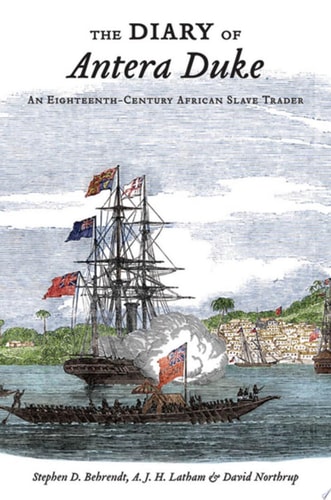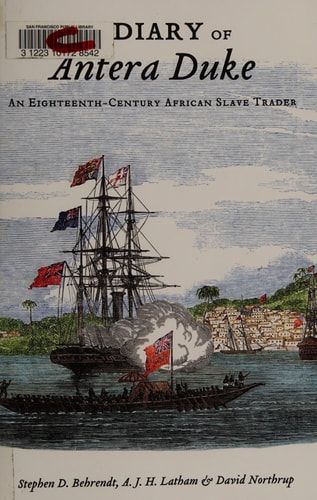
The Diary of Antera Duke, an Eighteenth-Century African Slave Trader
0
0
As an Amazon Associate and affiliate partner, Menrva Books earns from qualifying purchases. Learn more
Author Description
In his diary, Antera Duke (ca.1735-ca.1809) wrote the only surviving eyewitness account of the slave trade by an African merchant. A leader in late eighteenth-century Old Calabar, a cluster of Efik-speaking communities in the Cross River region, he resided in Duke Town, forty-five miles from the Atlantic Ocean in what is now southeast Nigeria. His diary, written in trade English from 1785 to 1788, is a candid account of daily life in an African community at the height of Calabar's overseas commerce. It provides valuable information on Old Calabar's economic activity both with other African businessmen and with European ship captains who arrived to trade for slaves, produce, and provisions.This new edition of Antera's diary, the first in fifty years, draws on the latest scholarship to place the diary in its historical context. Introductory essays set the stage for the Old Calabar of Antera Duke's lifetime, explore the range of trades, from slaves to produce, in which he rose to prominence, and follow Antera on trading missions across an extensive commercial hinterland. The essays trace the settlement and development of the towns that comprised Old Calabar and survey the community's social and political structure, rivalries among families, sacrifices of slaves, and witchcraft ordeals. This edition reproduces Antera's original trade-English diary with a translation into standard English on facing pages, along with extensive annotation. The Diary of Antera Duke furnishes a uniquely valuable source for the history of precolonial Nigeria and the Atlantic slave trade, and this new edition enriches our understanding of it.
Menrva's Summary
THE THESIS
This work investigates the economic and social realities of the eighteenth-century Atlantic slave trade through the rare, firsthand perspective of an African merchant. The editors, A. J. H. Latham, David Northrup, and Stephen D. Behrendt, utilize the primary source diary of Antera Duke to challenge external narratives of the period. By providing both the original trade-English text and a modern translation, the authors construct a framework that highlights the complex commercial and political interactions between Efik leaders and European ship captains in Old Calabar.
THE SCOPE MAP
What You Will Find
- A primary source diary covering the years 1785 to 1788 in Old Calabar.
- Scholarly essays detailing the social, political, and economic structures of Efik-speaking communities.
- Analysis of the trade dynamics involving slaves, local produce, and European maritime commerce.
- Extensive annotations and a side-by-side translation of the original trade-English manuscript.
THE AUTHORITY PERSPECTIVE
Historians and scholars identify this volume as a critical resource for understanding the internal mechanics of precolonial Nigerian commerce. Readers frequently note the academic density of the prose and the value of the contextual essays in interpreting the primary source material.
Page Count:
314
Publication Date:
2012-07-12
Publisher:
Oxford University Press
ISBN-10:
0199922837
ISBN-13:
9780199922833
History
Biography
African history
Nigeria
Persons
Slavery
Primary Source
Community Tags
Similar Books