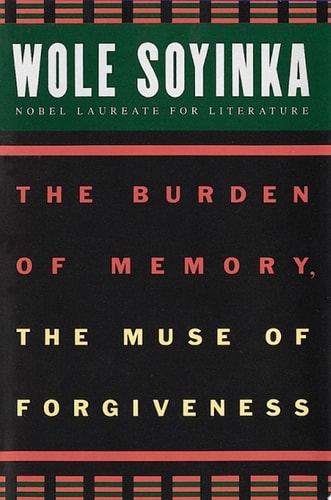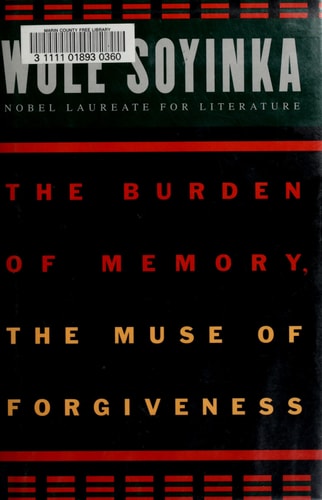
The Burden of Memory, the Muse of Forgiveness
0
0
As an Amazon Associate and affiliate partner, Menrva Books earns from qualifying purchases. Learn more
Author Description
When Nobel laureate Wole Soyinka's The Open Sore of a Continent appeared in 1996, it received rave reviews in the national media. Now comes Soyinka's powerful sequel to that fearless and passionate book, The Burden of Memory.Where Open Sore offered a critique of African nationhood and a searing indictment of the Nigerian military and its repression of human and civil rights, The Burden of Memory considers all of Africa--indeed, all the world--as it poses the next logical question: Once repression stops, is reconciliation between oppressor and victim possible? In the face of centuries long devastations wrought on the African continent and her Diaspora by slavery, colonialism, Apartheid and the manifold faces of racism what form of recompense could possibly be adequate? In a voice as eloquent and humane as it is forceful, Soyinka examines this fundamental question as he illuminates the principle duty and "near intolerable burden" of memory to bear the record of injustice. In so doing, he challenges notions of simple forgiveness, of confession and absolution, as strategies for social healing. Ultimately, he turns to art--poetry, music, painting--as one source that may nourish the seed of reconciliation, art as the generous vessel that can hold together the burden of memory and the hope of forgiveness.Based on Soyinka's Stewart-McMillan lectures delivered at the Du Bois Institute at Harvard, The Burden of Memory speaks not only to those concerned specifically with African politics, but also to anyone seeking the path to social justice through some of history's most inhospitable terrain.
Menrva's Summary
THE THESIS
The book investigates whether genuine reconciliation between oppressor and victim is possible in the aftermath of systemic state repression and historical trauma. Wole Soyinka, a Nobel laureate, utilizes his background as a playwright and political activist to synthesize historical analysis with philosophical inquiry. Drawing upon his Stewart-McMillan lectures at the W.E.B. Du Bois Institute, he argues that simple strategies of confession and absolution are insufficient for addressing the profound, centuries-long devastations of slavery, colonialism, and apartheid. He posits that the duty of memory is to maintain an accurate record of injustice while exploring the role of art as a necessary vessel for social healing.
THE SCOPE MAP
What You Will Find
- Analysis of the socio-political landscape of Africa and its Diaspora following periods of state-sanctioned repression.
- A critical examination of the limitations inherent in contemporary political strategies for reconciliation.
- Philosophical discourse on the intersection of historical memory, justice, and artistic expression.
- Case studies and reflections on the impact of colonialism, apartheid, and systemic racism on national identity.
THE AUTHORITY PERSPECTIVE
Experts and scholars recognize this work as a significant contribution to post-colonial discourse and political philosophy. Readers frequently note the intellectual density of Soyinka's prose, which demands careful engagement with his complex arguments regarding justice and historical accountability.
Page Count:
224
Publication Date:
1998-12-03
Publisher:
Oxford University Press
ISBN-10:
0195122054
ISBN-13:
9780195122053
Philosophy
History
Politics
Black authors
African history
Amnesty
Kindle eBooks
Africa
Kindle Store
Human rights
World politics
Social justice
Categories
Reconciliation
Nigeria