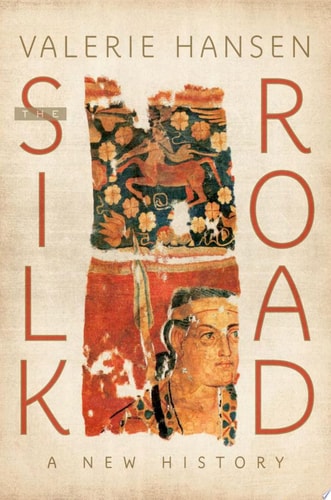
The Silk Road: A New History
0
0
As an Amazon Associate and affiliate partner, Menrva Books earns from qualifying purchases. Learn more
Author Description
The Silk Road is as iconic in world history as the Colossus of Rhodes or the Suez Canal. But what was it, exactly? It conjures up a hazy image of a caravan of camels laden with silk on a dusty desert track, reaching from China to Rome. The reality was different--and far more interesting--as revealed in this new history.In The Silk Road, Valerie Hansen describes the remarkable archeological finds that revolutionize our understanding of these trade routes. For centuries, key records remained hidden--sometimes deliberately buried by bureaucrats for safe keeping. But the sands of the Taklamakan Desert have revealed fascinating material, sometimes preserved by illiterate locals who recycled official documents to make insoles for shoes or garments for the dead. Hansen explores seven oases along the road, from Xi'an to Samarkand, where merchants, envoys, pilgrims, and travelers mixed in cosmopolitan communities, tolerant of religions from Buddhism to Zoroastrianism. There was no single, continuous road, but a chain of markets that traded between east and west. China and the Roman Empire had very little direct trade. China's main partners were the peoples of modern-day Iran, whose tombs in China reveal much about their Zoroastrian beliefs. Silk was not the most important good on the road; paper, invented in China before Julius Caesar was born, had a bigger impact in Europe, while metals, spices, and glass were just as important as silk. Perhaps most significant of all was the road's transmission of ideas, technologies, and artistic motifs.The Silk Road is a fascinating story of archeological discovery, cultural transmission, and the intricate chains across Central Asia and China.
Menrva's Summary
THE THESIS
How did the reality of the Silk Road differ from the popular image of a single, continuous trade route between China and Rome? Valerie Hansen, a professor of history at Yale University, utilizes recent archaeological discoveries from the Taklamakan Desert to challenge long-held historical assumptions. By examining recycled official documents and tomb artifacts, she argues that the Silk Road was actually a fragmented chain of local markets primarily facilitating regional exchange rather than direct transcontinental trade.
THE SCOPE MAP
What You Will Find
- Archaeological evidence from seven specific oases ranging from Xi'an to Samarkand.
- Analysis of recycled administrative documents used for footwear and burial garments.
- Examination of the transmission of religions including Buddhism and Zoroastrianism.
- Comparative study of the economic impact of paper, metals, and glass versus silk.
THE AUTHORITY PERSPECTIVE
Historians and archaeologists frequently cite this work for its rigorous use of primary source material recovered from desert sites. Scholars note that the text effectively dismantles romanticized myths while providing a clear, evidence-based framework for understanding Central Asian trade networks.
Page Count:
375
Publication Date:
2012-01-01
Publisher:
Oxford University Press
ISBN-10:
0199939217
ISBN-13:
9780199939213
History
Asia
Cultural History
Silk Road
Historic Sites
Trade
Archaeology
Asian History
Trade Routes
Central Asia
Cultural Anthropology
World Civilization
Community Tags
Similar Books