The Production of Difference
0
0
As an Amazon Associate and affiliate partner, Menrva Books earns from qualifying purchases. Learn more
Author Description
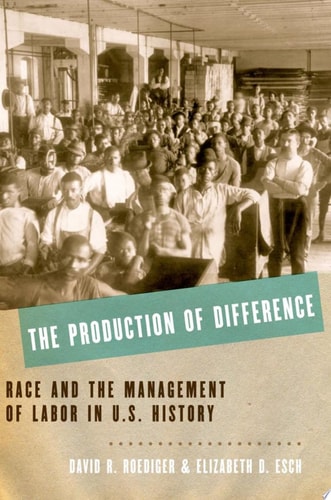
In 1907, pioneering labor historian and economist John Commons argued that U.S. management had shown just one symptom of originality, namely playing one race against the other. In this eye-opening book, David Roediger and Elizabeth Esch offer a radically new way of understanding the history of management in the United States, placing race, migration, and empire at the center of what has sometimes been narrowly seen as a search for efficiency and economy. Ranging from the antebellum period to the coming of the Great Depression, the book examines the extensive literature slave masters produced on how to manage and develop slaves; explores what was perhaps the greatest managerial feat in U.S. history, the building of the transcontinental railroad, which pitted Chinese and Irish work gangs against each other; and concludes by looking at how these strategies survive today in the management of hard, low-paying, dangerous jobs in agriculture, military support, and meatpacking. Roediger and Esch convey what slaves, immigrants, and all working people were up against as the objects of managerial control. Managers explicitly ranked racial groups, both in terms of which labor they were best suited for and their relative value compared to others. The authors show how whites relied on such alleged racial knowledge to manage and believed that the lesser races could only benefit from their tutelage. These views wove together managerial strategies and white supremacy not only ideologically but practically, every day at workplaces. Even in factories governed by scientific management, the impulse to play races against each other, and to slot workers into jobs categorized by race, constituted powerful management tools used to enforce discipline, lower wages, keep workers on dangerous jobs, and undermine solidarity. Painstakingly researched and brilliantly argued, The Production of Difference will revolutionize the history of labor race in the United States.
Menrva's Summary
THE THESIS
This book investigates how the development of American management practices was fundamentally structured by the strategic exploitation of racial divisions and white supremacy. David R. Roediger and Elizabeth D. Esch, both established scholars in labor history and American studies, utilize a wide array of primary source documents—ranging from antebellum slave management manuals to early 20th-century industrial records—to construct their argument. They contend that the history of U.S. management is not merely a pursuit of efficiency, but a deliberate, evolving system of racial categorization used to enforce discipline, suppress wages, and prevent labor solidarity.
THE SCOPE MAP
What You Will Find
- Analysis of management techniques from the antebellum period through the Great Depression.
- Case studies on the construction of the transcontinental railroad and its use of racialized work gangs.
- Examination of how slave management strategies influenced later industrial and scientific management practices.
- Documentation of how racial hierarchies were codified into workplace policies in agriculture, military support, and meatpacking.
THE AUTHORITY PERSPECTIVE
Scholars and historians frequently cite this work as a critical intervention in labor studies that successfully bridges the gap between economic history and the study of white supremacy. Readers often note the rigorous archival research and the clarity with which the authors connect historical management techniques to contemporary labor conditions.
Page Count:
296
Publication Date:
2012-01-01
Publisher:
Oxford University Press
ISBN-10:
0199930805
ISBN-13:
9780199930807
Economics
History
Labor history
Management
Race Relations
Sociology
Community Tags
Similar Books