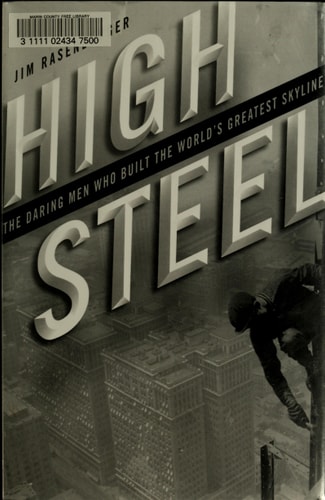
High Steel: The Daring Men Who Built the World's Greatest Skyline
0
0
As an Amazon Associate and affiliate partner, Menrva Books earns from qualifying purchases. Learn more
Author Description
With the birth of the steel-frame skyscraper in the late nineteenth century came a new breed of man, as bold and untamed as any this country had ever known. These "cowboys of the skies," as one journalist called them, were the structural ironworkers who walked steel beams -- no wider, often, than the face of a hardcover book -- hundreds of feet above ground, to raise the soaring towers and vaulting bridges that so abruptly transformed America in the twentieth century.Many early ironworkers were former sailors, new Americans of Irish and Scandinavian descent accustomed to climbing tall ships' masts and schooled in the arts of rigging. Others came from a small Mohawk Indian reservation on the banks of the St. Lawrence River or from a constellation of seaside towns in Newfoundland. What all had in common were fortitude, courage, and a short life expectancy. "We do not die," went an early ironworkers' motto. "We are killed."High Steel is the stirring epic of these men and of the icons they built -- and are building still. Shifting between past and present, Jim Rasenberger travels back to the earliest iron bridges and buildings of the nineteenth century; to the triumph of the Brooklyn Bridge and the 1907 tragedy of the Quebec Bridge, where seventy-five ironworkers, including thirty-three Mohawks, lost their lives in an instant; through New York's skyscraper boom of the late 1920s, when ironworkers were hailed as "industrial age heroes." All the while, Rasenberger documents the lives of several contempor-ary ironworkers raising steel on a twenty-first-century skyscraper, the Time Warner building in New York City.This is a fast-paced, bare-knuckled portrait of vivid personalities, containing episodes of startling violence (as when ironworkers dynamited the Los Angeles Times building in 1910) and exhilarating adventure. In the end, High Steel is also a moving account of brotherhood and family. Many of those working in the trade today descend from multigenerational dynasties
Menrva's Summary
THE THESIS
This book investigates the historical development of the structural ironworking trade and the lives of the men responsible for constructing the iconic skyscrapers and bridges of the American skyline. Jim Rasenberger, a journalist and historian, synthesizes archival research, historical accounts, and contemporary interviews to document the evolution of this dangerous profession. He argues that the ironworker represents a unique cultural archetype defined by physical risk, specialized skill, and a distinct sense of brotherhood that has persisted across generations.
THE SCOPE MAP
What You Will Find
- Historical analysis of the rise of steel-frame construction in the late 19th and early 20th centuries.
- Detailed accounts of major infrastructure projects including the Brooklyn Bridge and the Quebec Bridge.
- Examination of the cultural origins of ironworkers, specifically focusing on Mohawk communities and maritime laborers.
- Documentation of the labor movement, union dynamics, and industrial conflicts like the 1910 Los Angeles Times bombing.
Scope Limits
- The text does not provide a comprehensive technical manual on structural engineering or modern construction safety protocols.
- It focuses primarily on the North American experience, specifically New York City and related regional hubs.
THE AUTHORITY PERSPECTIVE
Critics and readers frequently note the book's ability to balance technical historical detail with a compelling, narrative-driven account of the workers' personal lives. Experts highlight this work as a significant contribution to labor history that successfully humanizes the industrial development of the American urban landscape.
Page Count:
384
Publication Date:
2004-03-01
Publisher:
Harper
ISBN-10:
0060004347
ISBN-13:
9780060004347
History
Biography
Architecture
Architecture
Social History
Industrial history
World
United States
Engineering
Americas
Labor history
Community Tags
Similar Books