Golden Harvest: Events at the Periphery of the Holocaust
0
0
As an Amazon Associate and affiliate partner, Menrva Books earns from qualifying purchases. Learn more
Author Description
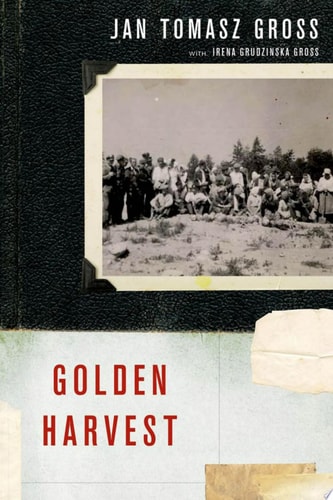
It seems at first commonplace: a group photograph of peasants at harvest time, after hard work well done, resting contentedly with their tools behind the fruits of their labor. But when one finally notices the "crops" scattered in front of the group, what seemed innocent on first view become horrific skulls and bones. Where are we? Who are the people in the photograph, and what are they doing? The starting point of Jan Tomasz and Irena Grudzinska Gross's Golden Harvest, this haunting photograph in fact depicts a group of peasants--"diggers"--atop a mountain of ashes at Treblinka, where some 800,000 Jews were gassed and cremated. The diggers are searching for gold and precious stones that Nazi executioners may have overlooked. The story captured in this grainy black-and-white photograph symbolizes the vast, continent-wide plunder of Jewish wealth that went hand-in-hand with the Holocaust. The seizure of Jewish assets during World War II occasionally generates widespread attention when Swiss banks are challenged to produce lists of dormant accounts, or national museums are forced to return stolen paintings. But the theft of Europe's Jewish population was not limited to conquering armies, leading banks, or museums. It was perpetrated also by local people, such as those pictured in the photograph. Lyrical and often heartbreaking, Golden Harvest takes readers across Europe as it exposes the economic ravaging of an entire society. Beginning with a simple group shot, the authors have written a moving book that evokes the depth and range, as well as the intimacy, of the Final Solution.
Menrva's Summary
THE THESIS
This book investigates the widespread, grassroots participation of local European populations in the plunder of Jewish wealth during the Holocaust. Jan Tomasz Gross and Irena Grudzinska Gross, both established scholars in Polish and European history, utilize a single, haunting photograph of peasants searching for valuables at the Treblinka extermination site as a catalyst for their inquiry. They argue that the economic destruction of the Jewish population was not solely the work of Nazi state apparatuses, but was facilitated and actively pursued by ordinary citizens across the continent.
THE SCOPE MAP
What You Will Find
- Analysis of the systematic looting of Jewish assets by local civilian populations during World War II.
- Examination of the Treblinka extermination camp as a site of both mass murder and subsequent scavenging.
- Historical evidence drawn from archival records, survivor testimonies, and photographic analysis.
- Exploration of the moral and economic implications of the Final Solution on local social structures.
THE AUTHORITY PERSPECTIVE
Scholars and historians recognize this work as a significant contribution to the study of the Holocaust's social and economic dimensions. Readers frequently note the challenging nature of the subject matter and the authors' direct, unflinching prose style.
Page Count:
152
Publication Date:
2012-01-01
Publisher:
Oxford University Press
ISBN-10:
0199939314
ISBN-13:
9780199939312
History
European History
Social History
Jewish History
Holocaust
Military History
Community Tags
Similar Books