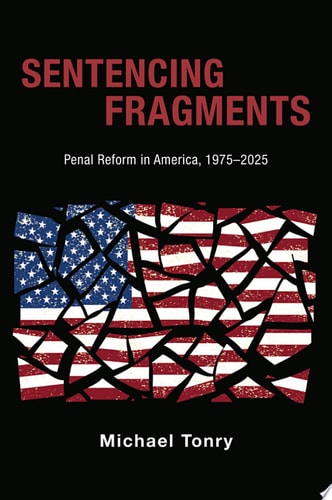
Sentencing Fragments: Penal Reform in America, 1975-2025
0
0
As an Amazon Associate and affiliate partner, Menrva Books earns from qualifying purchases. Learn more
Author Description
Almost everyone agrees--Right on Crime, the ACLU, Koch Industries, George Soros's Open Society Foundation, the editorial boards of the New York Times and the Wall Street Journal--that America's current systems for sentencing criminal offenders are a shambles, with crazy quilts of incompatible and conflicting laws, policies, and practices in every state and the federal system. Most everyone agrees that punishments are too severe, and too many people are in prison. However, the kinds of major changes required to undo mass incarceration and rebuild American sentencing are simply not happening. Despite well-intentioned rhetoric and media coverage, there has been very little meaningful change.In Sentencing Fragments, Michael Tonry explains what needs to be done to rebuild just systems of sentencing and punishment, and how to do it. This book tells the story of sentencing policy changes since 1975, examines research findings concerning their effects, and explains what does and does not work. Beyond calling attention to the devastating effects on the lives of the poor and disadvantaged and the latest empirical evidence, Tonry identifies the common moral theories behind criminal sentencing--as well as their larger assumptions about human nature--and discusses the ways in which different theories have bred very different sentencing policies. Sentencing Fragments concludes with a set of proposals for creating better policies and practices for the future, calling for American legislators and politicians to remake sentencing into the humane and just process that it always should have been.In lucid and engaging prose, Michael Tonry reveals the historical foundation for the current state of the American criminal justice system, while simultaneously offering a game plan for long overdue reform.
Menrva's Summary
THE THESIS
This book investigates why American sentencing systems remain dysfunctional and resistant to reform despite broad consensus on the need for change. Michael Tonry, a professor of law and expert in criminal justice policy, utilizes decades of legislative history and empirical data to argue that the current fragmented state of sentencing is a result of conflicting moral theories and political inertia. He posits that meaningful reform requires a fundamental shift in how legislators conceptualize human nature and the purpose of punishment.
THE SCOPE MAP
What You Will Find
- A historical analysis of sentencing policy shifts from 1975 to 2025.
- An examination of the moral theories underpinning criminal justice practices.
- Empirical evidence regarding the efficacy of various sentencing models.
- A set of policy proposals aimed at creating a more humane and consistent legal framework.
Scope Limits
- The text focuses primarily on the American federal and state systems rather than international comparative law.
- It does not provide a comprehensive legal manual for practitioners but rather a policy-oriented critique.
THE AUTHORITY PERSPECTIVE
Experts in the field of criminology recognize this work as a significant contribution to the discourse on mass incarceration and penal reform. Readers frequently note the academic rigor and the clarity with which Tonry synthesizes complex legislative history into actionable policy recommendations.
Page Count:
316
Publication Date:
2016-01-04
Publisher:
Oxford University Press
ISBN-10:
0190204680
ISBN-13:
9780190204686
Non-Fiction
Corrections
Criminology
Law
Professional Career & Trade
Sociology
Public Policy
Imprisonment
Administration of Justice
Community Tags
Similar Books