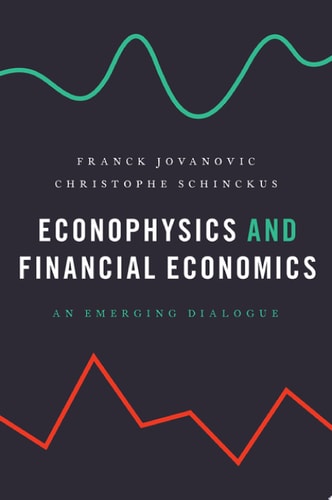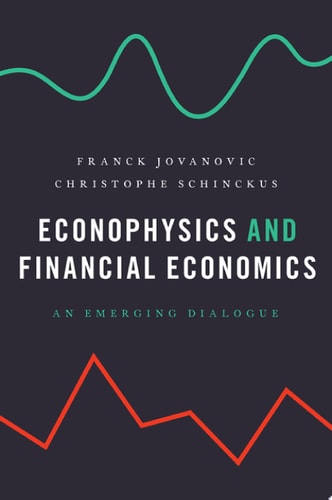
Econophysics and Financial Economics
0
0
As an Amazon Associate and affiliate partner, Menrva Books earns from qualifying purchases. Learn more
Author Description
Econophysics And Financial Economics Provides The First Extensive Analytic Comparison Between Models And Results From Econophysics And Financial Economics In An Accessible And Common Vocabulary. Jovanovic And Schinckus Move Beyond Disciplinary Frontiers To Initiate The Development Of A Common Theoretical Framework That Makes Sense For Both Traditionally Trained Financial Economists And Econophysicists. The Major Issues That Limit And Obstruct Collaboration Between The Two Fields Are Analyzed In Detail. The Book Explains The Theoretical And Methodological Foundations Of These Two Fields In An Accessible Vocabulary Providing The First Extensive Analytic Comparison Between Models And Results From Both Fields. By Mixing Conceptual, Historical, Theoretical And Formal Arguments And Analysis, The Book Details The Recent Results In Econophysics That Bring It Closer To Financial Economics. Beyond The Clarifying The Current Situation Of Two Camps, This Book Also Proposes A Generic Model Compatible With The Two Fields That In Turn Helps Define Minimal Conditions For Common Models. It Also Identifies What Remains To Be Done For Econophysicists To Contribute Significantly To Financial Economics. Finally, This Book Provides A Research Agenda For A More Fruitful Collaboration Between Econophysicists And Financial Economists, Creating New Research Opportunities. Econophysics And Financial Economics Is An Important Step In Creating A Profitable Dialogue Between Financial Economists And Econophysicists. It Does So By Identifying A Common Theoretical Framework Allowing The Creation Of More Efficient Models For The Financial Industry.
Menrva's Summary
THE THESIS
This book investigates the theoretical and methodological barriers preventing collaboration between the fields of econophysics and financial economics. Authors Christophe Schinckus and Franck Jovanovic utilize a comparative historical and analytical framework to reconcile the disparate vocabularies and modeling approaches of these two disciplines. By identifying common ground, the authors propose a generic model intended to facilitate future interdisciplinary research and more efficient financial industry applications.
THE SCOPE MAP
What You Will Find
- Comparative analysis of modeling techniques in econophysics and financial economics
- A proposed generic theoretical framework for cross-disciplinary integration
- Historical and conceptual evaluation of the development of both fields
- A structured research agenda for future collaboration
Scope Limits
- The text does not provide a comprehensive manual for day-to-day financial trading
- It does not cover basic introductory economics or fundamental physics principles
THE AUTHORITY PERSPECTIVE
Experts recognize this work as a significant effort to bridge the gap between quantitative physics-based modeling and traditional financial theory. Readers frequently note the academic density of the prose, which is intended for researchers and professionals familiar with both economic and physical modeling paradigms.
Page Count:
256
Publication Date:
2016-01-01
Publisher:
Oxford University Press
ISBN-10:
0190205040
ISBN-13:
9780190205041
Economics
Finance
Physics
Econophysics
Community Tags
Similar Books