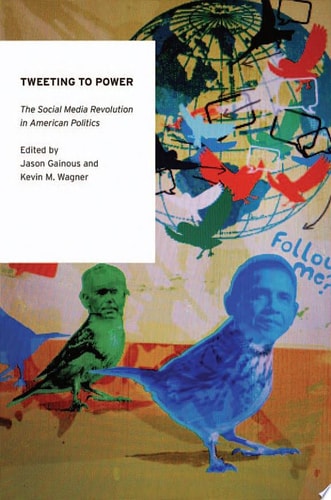
Tweeting to Power
0
0
As an Amazon Associate and affiliate partner, Menrva Books earns from qualifying purchases. Learn more
Author Description
Online Social Media Are Changing The Face Of Politics In The United States. Beginning With A Strong Theoretical Foundation Grounded In Political, Communications And Psychology Literature, Tweeting To Power Examines The Effect Of Online Social Media On How People Come To Learn, Understand And Engage In Politics. Gainous And Wagner Propose That Platforms Such As Facebook And Twitter Offer The Opportunity For A New Information Flow That Is No Longer Being Structured And Limited By The Popular Media. Television And Newspapers, Which Were Traditionally The Sole Or Primary Gatekeeper, Can No Longer Limit Or Govern What Information Is Exchanged. By Lowering The Cost Of Both Supplying The Information And Obtaining It, Social Networking Applications Have Recreated How, When And Where People Are Informed. To Establish This Premise, Gainous And Wagner Analyze Multiple Datasets, Quantitative And Qualitative, Exploring And Measuring The Use Of Social Media By Voters And Citizens As Well As The Strategies And Approaches Adopted By Politicians And Elected Officials. They Illustrate How These New And Growing Online Communities Are New Forums For The Exchange Of Information That Is Governed By Relationships Formed And Maintained Outside Traditional Media. Using Empirical Measures, They Prove Both How Candidates Utilize Twitter To Shape The Information Voters Rely Upon And How Effective This Effort Was At Garnering Votes In The 2010 Congressional Elections. With Both Theory And Data, Gainous And Wagner Show How The Social Media Revolution Is Creating A New Paradigm For Political Communication And Shifting The Very Foundation Of The Political Process.
Menrva's Summary
THE THESIS
This book investigates how the rise of social media platforms has fundamentally altered political communication and engagement in the United States. Authors Jason Gainous and Kevin M. Wagner, both scholars in political science and communication, utilize a framework grounded in psychological and political theory to argue that social media has dismantled the traditional gatekeeping role of legacy media. By reducing the costs of information production and consumption, these digital platforms have created a new paradigm for how citizens interact with political information and how candidates mobilize voters.
THE SCOPE MAP
What You Will Find
- Analysis of voter behavior and information consumption patterns in the digital age.
- Examination of strategic communication tactics employed by politicians and elected officials.
- Empirical assessment of Twitter usage and its correlation with election outcomes during the 2010 Congressional cycle.
- Theoretical exploration of the shift from centralized media gatekeeping to decentralized, relationship-based information networks.
THE AUTHORITY PERSPECTIVE
Experts recognize this work as a foundational study on the early impact of social media on American electoral politics. Readers frequently note the academic density of the prose and the authors' rigorous reliance on quantitative datasets to support their claims regarding the shift in political power dynamics.
Page Count:
224
Publication Date:
2013-01-01
Publisher:
Oxford University Press, Incorporated
ISBN-10:
0199965080
ISBN-13:
9780199965083
Sociology
Twitter
Government
Communication in politics
Technology
Communication
Social Media
Political Aspects
Community Tags
Similar Books