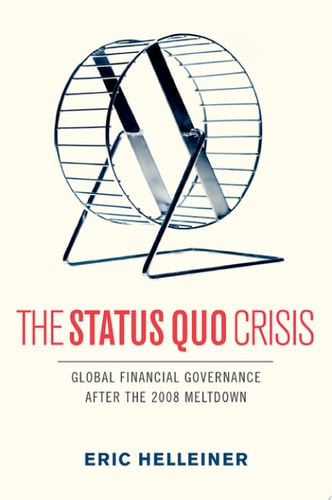
The Status Quo Crisis
0
0
As an Amazon Associate and affiliate partner, Menrva Books earns from qualifying purchases. Learn more
Author Description
The 2008 Financial Crisis Was The Worst Since The Great Depression And Many Voices Argued That It Would Transform Global Financial Governance. Analysts Anticipated A Bretton Woods Moment, Referring To The 1944 Conference That Established The Postwar International Financial Order. Widespread Expectations Of Change Were Then Reinforced By The Creation Of The G20 Leaders' Forum, Extensive Debates About The Dollar's Global Role, The Launching Of International Financial Regulatory Reforms, And The Establishment Of The Financial Stability Board. But Half A Decade Later, How Much Has Really Changed? In The Status Quo Crisis, Helleiner Surveys The Landscape And Argues That Continuity Has Marked Global Financial Governance More Than Dramatic Transformation. The G20 Leaders Forum Contributed Much Less To The Management Of The Crisis Than Advertised. The Us Dollar Remains Unchallenged As The World's Dominant International Currency. The Market-friendly Nature Of Pre-crisis International Financial Regulation Has Been Not Overturned In A Significant Manner. And The Financial Stability Board Has Strengthened The Governance Of International Financial Standards In Only Very Modest Ways. What We Are Left With Are Some Small-bore Incremental Changes That, Collectively, Have Not Fundamentally Restructured The Governance Of The Global Financial System. Helleiner Argues That This Strangely Conservative Result Was Generated Partly By The Structural Power And Active Policy Choices Of The Country At The Center Of The Crisis: The United States. Status Quo Outcomes Also Reflected The Unexpected Weakness Of Europe And Conservatism Of Policymakers In Large Emerging Market Countries. Only If This Distinct Configuration Of Power And Politics Among And Within Influential States Shifted In The Coming Years Might The 2008 Crisis Leave A More Transformative Legacy Over The Longer Term. Cutting Against Much Of The Received Wisdom On Offer Today, The Status Quo Crisis Will Be Essential Reading For Thos
Menrva's Summary
THE THESIS
The book investigates why the 2008 financial crisis failed to trigger a fundamental transformation of global financial governance, despite widespread expectations of a new Bretton Woods moment. Eric Helleiner, a professor of political science, utilizes a rigorous analysis of post-2008 policy outcomes to challenge the prevailing narrative of systemic change. He argues that the global financial order remained largely intact due to the structural power of the United States, the unexpected weakness of European institutions, and the inherent conservatism of policymakers in emerging market economies. The text provides a detailed examination of how these political dynamics resulted in incremental adjustments rather than the anticipated overhaul of international financial systems.
THE SCOPE MAP
What You Will Find
- An evaluation of the G20 Leaders' Forum and its limited impact on crisis management.
- An analysis of the continued dominance of the US dollar in international finance.
- A review of international financial regulatory reforms and the role of the Financial Stability Board.
- A political economy framework explaining the persistence of market-friendly regulatory standards.
THE AUTHORITY PERSPECTIVE
Experts recognize this work as a critical counter-narrative to the belief that the 2008 crisis fundamentally altered global governance structures. Readers frequently note the academic density of the prose and the author's meticulous attention to the political constraints that prevented significant institutional reform.
Page Count:
240
Publication Date:
2014-01-01
Publisher:
Oxford University Press
ISBN-10:
0199973644
ISBN-13:
9780199973644
Economics
History
Finance
International relations
Community Tags
Similar Books