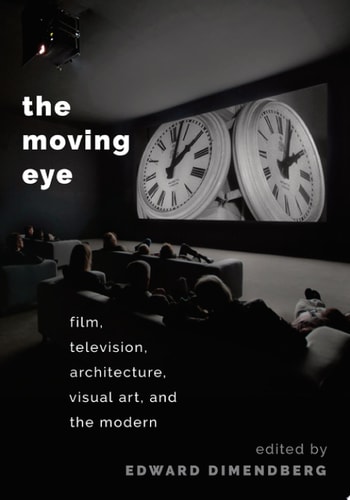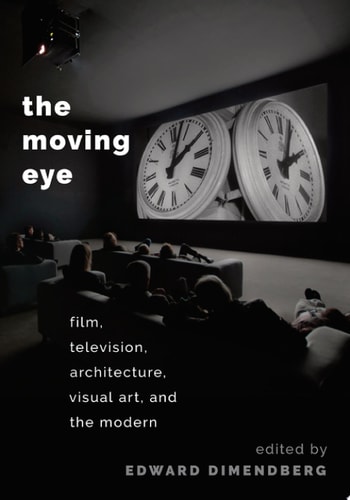
The Moving Eye: Film, Television, Architecture, Visual Art and the Modern
0
0
As an Amazon Associate and affiliate partner, Menrva Books earns from qualifying purchases. Learn more
Author Description
Once the province of film and media scholars, today the moving image is of broad concern to historians of art and architecture and designers of everything from websites to cities. As museums and galleries devote increasing space to video installations which no longer presuppose a fixed viewer, urban space becomes envisioned and planned through "fly throughs," and technologies such as GPS add data to the experience of travel, moving images have captured the attention of geographers and scholars across the humanities and social sciences. Their practice of "mobility studies" is remaking how we understand a contemporary world in relentless motion. Media theorist and historian Anne Friedberg (1952-2009) was among the first practitioners of visual studies to theorize the experience of vision in motion. Her books have become key points of reference in the discussion of the windows that frame images and the viewers in motion who perceive them. Although widely influential beyond her own discipline, Friedberg's work has never been the subject of an extended study. The Moving Eye: Film, Television, Architecture, Visual Art and the Modern gathers together essays by renowned thinkers in media studies, art history, architecture, and museum studies to consider the rich implications of her work for understanding film and video, new media, visual art, architecture, exhibition design, urban space, and virtual reality. Ranging from early cinema, to works by Le Corbusier, Sergei Eisenstein, Gordon Matta-Clark, and Pierre Huyghe, to theories of the image in motion informed by psychoanalysis, theories of the public sphere, and animal studies, each of the nine essays in the book advances the lines of inquiry commenced by Friedberg.
Menrva's Summary
THE THESIS
This collection of essays investigates the intellectual legacy of media theorist Anne Friedberg and her foundational contributions to the study of vision in motion. Edward Dimendberg and a group of scholars from diverse disciplines analyze how Friedberg’s theories regarding the framed image and the mobile viewer continue to inform contemporary understandings of film, architecture, and urban space. The volume serves as an extended critical examination of how visual studies intersects with the humanities and social sciences in an era defined by constant mobility.
THE SCOPE MAP
What You Will Find
- Analysis of the intersection between media theory and architectural design
- Case studies ranging from early cinema to contemporary video installations
- Theoretical frameworks incorporating psychoanalysis, public sphere theory, and animal studies
- Discussions on the work of figures such as Le Corbusier, Sergei Eisenstein, and Gordon Matta-Clark
Scope Limits
- The text does not provide a comprehensive biography of Anne Friedberg
- It does not offer a technical manual for digital media production
THE AUTHORITY PERSPECTIVE
Scholars and critics recognize this volume as a significant contribution to the field of visual studies, particularly for its interdisciplinary approach to media theory. Readers frequently note the academic density of the prose, which is intended for researchers and students familiar with the discourse surrounding Friedberg's work.
Page Count:
184
Publication Date:
2019-06-06
Publisher:
Oxford University Press
ISBN-10:
0190218436
ISBN-13:
9780190218430
Architecture
Cultural Theory
Film Theory
Art History
Media Studies
Visual Studies
urban planning
Visualization