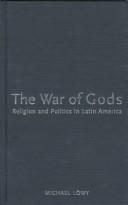
The War of Gods
0
0
As an Amazon Associate and affiliate partner, Menrva Books earns from qualifying purchases. Learn more
Author Description
The War of Gods traces the intimate relationship between religion, politics and social issues in Latin America over the last three decades, as liberation theology has reinterpreted the vocation of the Catholic Church and as Protestantism has made inroads on traditional Catholic strongholds. In the 1960s liberation theology addressed itself to the problems of a continent racked by poverty and oppression. Comprising a network of localized communities and pastoral organizations, it soon became something much more than a doctrinal current. Liberationist Christianity defined itself in a multitude of social struggles, particularly in Brazil and Central America. Many of the most momentous events in the continent's recent history - the Nicaraguan revolution, the development of the PT (Workers' Party) in Brazil, the tortuous ascent of President Aristide in Haiti and the uprising in Chiapas - have borne witness to the influence of a distinctive liberationist Christianity. Michael Lowy proposes here a new interpretation - inspired by the sociology of culture - both of liberation theology and of the rival religious projects in Latin America.
Menrva's Summary
THE THESIS
This book examines the complex interplay between religion, politics, and social issues in Latin America over the past three decades. It details how liberation theology emerged in the 1960s to address poverty and oppression, evolving into a significant force in social struggles across Brazil and Central America. The work also explores the growing influence of Protestantism in traditionally Catholic regions and analyzes key historical events, such as the Nicaraguan revolution and the Chiapas uprising, as manifestations of this religious and political transformation.
THE SCOPE MAP
- Analysis of liberation theology's origins and development in the 1960s.
- Exploration of Protestantism's expansion in Latin America.
- Case studies of major historical events influenced by liberationist Christianity (Nicaraguan revolution, PT in Brazil, Aristide in Haiti, Chiapas uprising).
- A new interpretation of liberation theology and rival religious projects, drawing on the sociology of culture.
- Focus on the intimate relationship between religion, politics, and social issues.
- Geographical scope primarily focused on Latin America.
THE AUTHORITY PERSPECTIVE
Michael Löwy's "The War of Gods" offers a sociological interpretation of the religious and political landscape of Latin America. The book is noted for its examination of liberation theology's evolution from a doctrinal current to a force in social struggles, and its analysis of the impact of Protestantism. It connects these religious shifts to significant historical events, providing a framework for understanding the continent's recent past.
Page Count:
163
Publication Date:
1996-01-01
ISBN-10:
1859840027
Non-Fiction
Religion
Politics
History
Latin America
Social Issues
Community Tags
Similar Books