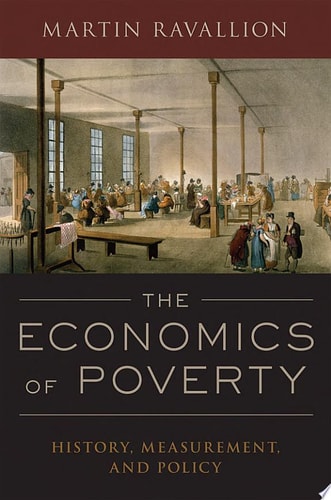
The Economics of Poverty: History, Measurement, and Policy
0
0
As an Amazon Associate and affiliate partner, Menrva Books earns from qualifying purchases. Learn more
Author Description
There are fewer people living in extreme poverty in the world today than 30 years ago. While that is an achievement, continuing progress for poor people is far from assured. Inequalities in access to key resources threaten to stall growth and poverty reduction in many places. The world's poorest have made only a small absolute gain over those 30 years. Progress has been slow against relative poverty as judged by the standards of the country and time one lives in, and a great many people in the world's emerging middle class remain vulnerable to falling back into poverty.The Economics of Poverty reviews critically past and present debates on poverty, spanning both rich and poor countries. The book provides an accessible new synthesis of current economic thinking on key questions: How is poverty measured? How much poverty is there? Why does poverty exist, and is it inevitable? What can be done to reduce poverty? Can it even be eliminated? The book does not assume that readers know economics already. Those new to the subject get a lot of help along the way in understanding its concepts and methods. Economics lives through its relevance to real world problems, and here the problem of poverty is both the central focus and a vehicle for learning.
Menrva's Summary
THE THESIS
This book investigates the core question of how poverty is defined, measured, and addressed through the lens of economic theory and historical policy analysis. Martin Ravallion, a prominent economist with extensive experience in development research, synthesizes decades of data to evaluate why poverty persists despite global economic growth. He presents a framework that bridges the gap between abstract economic models and the practical realities of inequality, vulnerability, and resource access.
THE SCOPE MAP
What You Will Find
- Historical analysis of global poverty reduction trends over the last three decades
- Methodological explanations of poverty measurement tools and indices
- Economic frameworks for understanding the causes of persistent poverty
- Policy evaluations regarding the feasibility of poverty elimination
Scope Limits
- Does not assume prior advanced knowledge of economic theory
- Focuses primarily on economic perspectives rather than sociological or purely political science frameworks
THE AUTHORITY PERSPECTIVE
Experts recognize this work as a comprehensive synthesis of development economics that remains accessible to non-specialists. Readers frequently note that the text serves as a foundational resource for understanding the complexities of poverty measurement and the limitations of current policy interventions.
Page Count:
736
Publication Date:
2016-01-07
Publisher:
Oxford University Press
ISBN-10:
0190212764
ISBN-13:
9780190212766
Economics
History
Social policy
Poverty
Public Policy
Community Tags
Similar Books