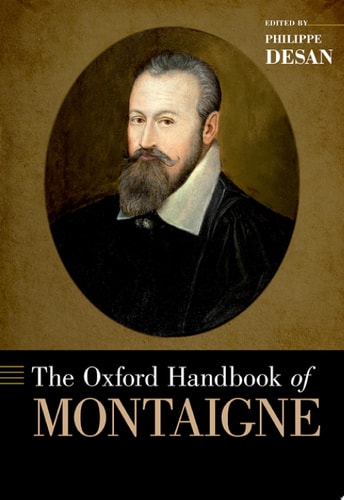
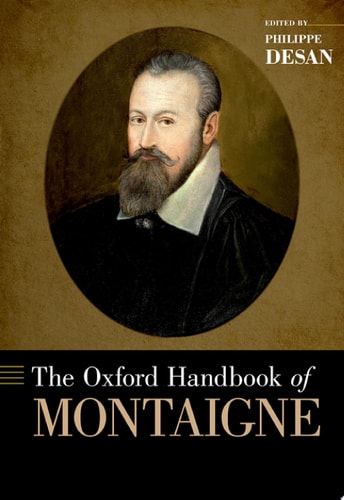
The Oxford Handbook of Montaigne
0
0
As an Amazon Associate and affiliate partner, Menrva Books earns from qualifying purchases. Learn more
Author Description
In 1580, Michel de Montaigne (1533-1592) published a book unique by its title and its content: Essays. A literary genre was born. At first sight, the Essays resemble a patchwork of personal reflections, but they engage with questions that animate the human mind, and tend toward a single goal: to live better in the present and to prepare for death. For this reason, Montaigne's thought and writings have been a subject of enduring interest across disciplines. This Handbook brings together essays by prominent scholars that examine Montaigne's literary, philosophical, and political contributions, and assess his legacy and relevance today in a global perspective. The chapters of this Handbook offer a sweeping study of Montaigne across different disciplines and in a global perspective. One section covers the historical Montaigne, situating his thought in his own time and space, notably the Wars of Religion in France. The political, historical and religious context of Montaigne's Essays requires a rigorous presentation to inform the modern reader of the issues and problems that confronted Montaigne and his contemporaries in his own time. In addition to this contextual approach to Montaigne, the Handbook also establishes a connection between Montaigne's writings and issues and problems directly relevant to our modern times, that is to say, our age of global ideology. Montaigne's considerations, or Essays, offer a point of departure for the modern reader's own assessments. The Essays analyze what can be broadly defined as human nature, the endless process by which the individual tries to impose opinions upon others through the production of laws, policies or philosophies. Montaigne's motto -- What do I know? -- is a simple question yet one of perennial significance. One could argue that reading Montaigne today teaches us that the angle defines the world we see, or, as Montaigne wrote: What matters is not merely that we see the thing, but how we see it.
Menrva's Summary
THE THESIS
This volume investigates the enduring intellectual significance of Michel de Montaigne’s Essays by situating his work within its original historical context while evaluating its relevance to contemporary global discourse. Edited by Philippe Desan, the handbook compiles contributions from leading scholars to analyze Montaigne’s literary, philosophical, and political contributions. The text argues that Montaigne’s skepticism and focus on human nature provide a critical framework for navigating modern ideological challenges.
THE SCOPE MAP
What You Will Find
- Historical analysis of the French Wars of Religion and their impact on Montaigne's thought.
- Interdisciplinary examinations of Montaigne's influence on philosophy, politics, and literature.
- Comparative studies connecting 16th-century perspectives to modern global issues.
Scope Limits
- The text does not provide a biographical narrative of Montaigne’s life outside of his intellectual and political context.
- It does not serve as a primary source translation of the Essays themselves.
THE AUTHORITY PERSPECTIVE
Scholars and students of Renaissance literature frequently cite this handbook as a comprehensive resource for understanding the multifaceted nature of Montaigne's work. Experts highlight the text's academic density and its success in bridging the gap between historical scholarship and modern philosophical application.
Page Count:
480
Publication Date:
2016-01-01
Publisher:
Oxford University Press
ISBN-10:
0190215348
ISBN-13:
9780190215347
Philosophy
History
Literary Criticism
French literature
Community Tags
Other Editions(2)
Similar Books
Reader Comments
Share Your Thoughts
No comments yet. Be the first to share your thoughts!