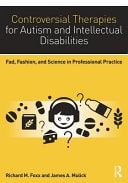
Controversial Therapies for Autism and Intellectual Disabilities: Fad, Fashion, and Science in Professional Practice
0
0
As an Amazon Associate and affiliate partner, Menrva Books earns from qualifying purchases. Learn more
Author Description
One of the largest and most complex human services systems in history has evolved to address the needs of people with autism and intellectual disabilities, yet important questions remain for many professionals, administrators, and parents. What approaches to early intervention, education, treatment, therapy, and remediation really help those with autism and other intellectual disabilities improve their functioning and adaptation? Alternatively, what approaches represent wastes of time, effort, and resources? Controversial Therapies for Autism and Intellectual Disabilities, 2nd Edition brings together leading behavioral scientists and practitioners to shed much-needed light on the major controversies surrounding these questions. Expert authors review the origins, perpetuation, and resistance to scrutiny of questionable practices, and offer a clear rationale for appraising the quality of various services. The second edition of Controversial Therapies for Autism and Intellectual Disabilities has been fully revised and updated and includes entirely new chapters on psychology fads, why applied behavioral analysis is not a fad, rapid prompting, relationship therapies, the gluten-free, casein-free diet, evidence based practices, state government regulation of behavioral treatment, teaching ethics, and a parents' primer for autism treatments.
Menrva's Summary
THE THESIS
This book investigates the efficacy and validity of various therapeutic approaches for individuals with autism and intellectual disabilities, distinguishing between scientifically supported methods and those that are fads or fashions in professional practice. The authors, leading behavioral scientists and practitioners, examine the origins and persistence of questionable practices, providing a framework for evaluating the quality of services. The text addresses the complex human services system developed for these populations, aiming to clarify which interventions genuinely improve functioning and adaptation and which represent wasted resources. The second edition includes updated content and new chapters on specific controversial therapies and evidence-based practices.
THE SCOPE MAP
- Analysis of the origins and perpetuation of questionable practices in autism and intellectual disability services.
- A clear rationale for appraising the quality of various therapeutic services.
- Discussion of psychology fads and why applied behavioral analysis is not considered a fad.
- In-depth review of specific therapies including rapid prompting and relationship therapies.
- Examination of dietary interventions such as the gluten-free, casein-free diet.
- Exploration of evidence-based practices and state government regulation of behavioral treatment.
- Chapters on teaching ethics and a primer for parents on autism treatments.
THE AUTHORITY PERSPECTIVE
The book is structured to provide professionals and administrators with a critical lens through which to evaluate therapeutic interventions for autism and intellectual disabilities. It aims to differentiate between scientifically validated approaches and those that lack empirical support, addressing a significant need within the field. The inclusion of new chapters in the second edition indicates an effort to keep pace with evolving practices and controversies. The text is designed to inform decision-making regarding resource allocation and treatment selection, emphasizing evidence-based practices.
Page Count:
568
Publication Date:
2016-01-01
Publisher:
Routledge
ISBN-10:
1138802239
ISBN-13:
9781138802230
Science
Non-Fiction
Health
Psychology
Therapies
Autism
Behavioral Science
Professional Practice