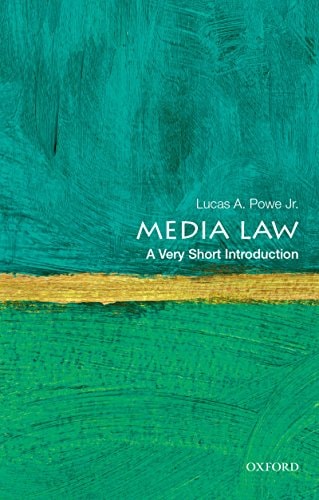
Media Law: A Very Short Introduction
0
0
As an Amazon Associate and affiliate partner, Menrva Books earns from qualifying purchases. Learn more
Author Description
Between 1964 and 1989, the US Supreme Court largely rewrote the constitutional law of the media. In doing so the Court protected virtually all materials from laws that penalized dissemination. But simultaneously the Court also approved some government policies that made access to information more difficult, causing Justice Potter Stewart to observe that the "Constitution is neither a Freedom of Information Act nor an Official Secrets Act." The media that existed during the twenty-five years of explosive legal change was relatively stable. Most Americans who wished to learn about news and public affairs received quite similar information. Over the last twenty-five years, and especially the last decade, cable, social media, and the internet combined to transform the media. The law that developed to deal with the old media is the law that now applies to the new media. Yet the underlying assumptions of that law, especially that citizens rationally consider various sides of a debate, may no longer hold. Media Law: A Very Short Introduction provides a description of the development and status of the law relating to all media -- newspapers, magazines, books, broadcasting, the Internet -- in the United States and the United Kingdom. It deals with criticism of government, taxation, defamation, privacy, libel, access to people, data, and places, obscenity, blasphemy, and the various issues created by the Internet.
Menrva's Summary
THE THESIS
This book investigates how legal frameworks originally designed for traditional media struggle to govern the rapidly evolving landscape of digital communication and social media. Lucas A. Powe Jr., a professor of law and government with extensive experience in First Amendment studies, examines the historical shift in Supreme Court rulings between 1964 and 1989. He argues that the assumptions of rational public discourse underlying these older laws are increasingly challenged by the current technological environment in both the United States and the United Kingdom.
THE SCOPE MAP
What You Will Find
- Historical analysis of US Supreme Court media law precedents from 1964 to 1989
- Comparative legal perspectives between the United States and the United Kingdom
- Examination of legal issues including defamation, privacy, libel, obscenity, and blasphemy
- Discussion of modern challenges posed by the internet and social media
Scope Limits
- Does not provide a comprehensive legal manual for practitioners
- Does not cover international media law beyond the US and UK
THE AUTHORITY PERSPECTIVE
Readers frequently note the concise and accessible nature of the prose, which distills complex constitutional history into a manageable format. Experts highlight this as a useful introductory text for students and laypeople seeking to understand the intersection of free speech and modern digital regulation.
Page Count:
160
Publication Date:
2020-01-01
Publisher:
Oxford University Press
ISBN-10:
0190219726
ISBN-13:
9780190219727
Non-Fiction
Constitutional Law
Media Studies
Mass media
Law
Community Tags
Similar Books