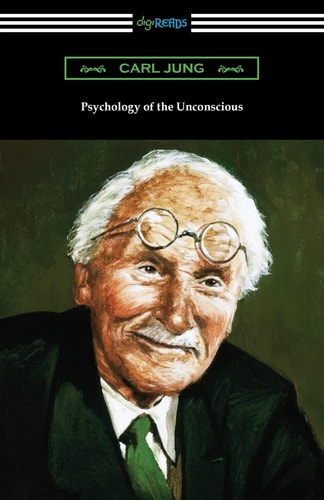
Psychology of the Unconscious
0
0
As an Amazon Associate and affiliate partner, Menrva Books earns from qualifying purchases. Learn more
Author Description
First published in German in 1912 and translated into English in 1916, "Psychology of the Unconscious" is one of Carl Jung's most important works. Jung was a promising young Swiss psychiatrist and psychoanalyst when he caught the attention of Sigmund Freud. The two began a lengthy correspondence and Freud viewed Jung as the heir to his theory of the future of psychoanalysis. Jung's views began to diverge from his mentor's however and the publication of "Psychology of the Unconscious" was the formal end of their collaboration and friendship. Jung's work delved deeply into the fantasies and mental visions of a patient that he believed had early signs of schizophrenia and concluded that these detailed historical fantasies revealed hidden sexual and psychic energies that took on symbolic forms in the patient's conscious mind. Jung's analysis laid the foundation for many of the theories that he would later become so famous for, such as the collective unconscious and archetypes. "Psychology of the Unconscious" remains an important contribution to the development of analytical psychoanalysis as a beneficial and effective therapy. This edition is printed on premium acid-free paper and follows the translation of Beatrice M. Hinkle.
Menrva's Summary
THE THESIS
This seminal work explores the symbolic language of the unconscious mind, challenging established psychoanalytic thought and laying the groundwork for new theories of the psyche. Carl Jung, a prominent Swiss psychiatrist, presents a deep analysis of a patient exhibiting early signs of schizophrenia, interpreting their fantasies and visions as manifestations of repressed psychic and sexual energies. The book details Jung's divergence from Sigmund Freud's theories, marking a formal end to their collaboration. Jung's examination of historical fantasies within the patient's conscious mind introduces foundational concepts that would later define his work, including the collective unconscious and archetypes, offering a critical contribution to the development of analytical psychoanalysis.
THE SCOPE MAP
- Detailed analysis of a patient's fantasies and mental visions.
- Exploration of symbolic forms of repressed sexual and psychic energies.
- Discussion of the historical context within the patient's conscious mind.
- Introduction to foundational concepts of the collective unconscious and archetypes.
- Analysis of the divergence between Jung's and Freud's psychoanalytic theories.
- Examination of analytical psychoanalysis as a therapeutic approach.
- Based on the translation by Beatrice M. Hinkle, printed on premium acid-free paper.
THE AUTHORITY PERSPECTIVE
This work is regarded as a pivotal text in the development of analytical psychology, marking a significant break from Freudian psychoanalysis. Jung's exploration of the unconscious, particularly his analysis of a patient's complex fantasies, introduced groundbreaking concepts like the collective unconscious and archetypes. The book's publication led to the formal end of Jung's collaboration with Freud, highlighting the profound theoretical differences that emerged between them. It remains an essential contribution to understanding the evolution of psychoanalytic thought and its therapeutic applications.
Page Count:
384
Publication Date:
2021-07-03
Publisher:
Neeland Media
ISBN-10:
1420973401
ISBN-13:
9781420973402
Psychology
Non-Fiction
Mental Health
Psychoanalysis
History of Psychology
Community Tags
Similar Books