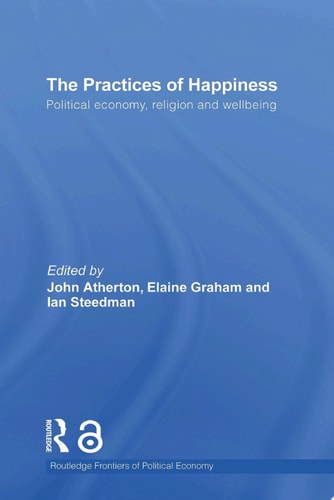
The Practices of Happiness: Political Economy, Religion and Wellbeing
0
0
As an Amazon Associate and affiliate partner, Menrva Books earns from qualifying purchases. Learn more
Author Description
A PDF version of this book is available for free in open access via www.tandfebooks.com as well as the OAPEN Library platform, www.oapen.org. It has been made available under a Creative Commons Attribution-Non Commercial-No Derivatives 3.0 license and is part of the OAPEN-UK research project. There is growing evidence that rising levels of prosperity in Western economies since 1945 have not been matched by greater incidences of reported well-being and happiness. Indeed, material affluence is often accompanied instead by greater social and individual distress. A growing literature within the humanities and social sciences is increasingly concerned to chart not only the underlying trends in recorded levels of happiness, but to consider what factors, if any, contribute to positive and sustainable experiences of well-being and quality of life. Increasingly, such research is focusing on the importance of values and beliefs in human satisfaction or quality of life; but the specific contribution of religion to these trends is relatively under-examined. This unique collection of essays seeks to rectify that omission, by identifying the nature and role of the religious contribution to wellbeing. A unique collection of nineteen leading scholars from the field of economics, psychology, public theology and social policy have been brought together in this volume to explore the religious contribution to the debate about happiness and well-being. These essays explore the religious dimensions to a number of key features of well-being, including marriage, crime and rehabilitation, work, inequality, mental health, environment, participation, institutional theory, business and trade. They engage particularly closely with current trends in economics in identifying alternative models of economic growth which focus on its qualitative as well as quantitative dimensions. This unique volume brings to public notice the nature and role of religion’s co
Menrva's Summary
THE THESIS
This book investigates the complex relationship between economic prosperity, political structures, and the persistent levels of unhappiness observed in Western societies since World War II. It brings together nineteen leading scholars from economics, psychology, public theology, and social policy to explore the often-underestimated role of religion in contributing to human satisfaction and quality of life. The essays examine how religious dimensions intersect with key aspects of well-being, including marriage, crime, work, inequality, mental health, environmental concerns, and business practices. The volume critically engages with contemporary economic thought, proposing alternative models of growth that consider qualitative as well as quantitative factors.
THE SCOPE MAP
- Analysis of the paradox of rising prosperity not correlating with increased happiness or well-being.
- Exploration of the role of values and beliefs in human satisfaction.
- Specific focus on the under-examined contribution of religion to well-being.
- Essays by leading scholars in economics, psychology, public theology, and social policy.
- Examination of religious dimensions in areas such as marriage, crime, work, and mental health.
- Engagement with alternative economic growth models emphasizing qualitative aspects.
- Discussion of religion's role in business, trade, and institutional theory.
- Consideration of environmental concerns and societal participation through a religious lens.
THE AUTHORITY PERSPECTIVE
This collection of essays addresses a significant gap in research by exploring the religious contribution to well-being and happiness in Western economies. The work is notable for bringing together nineteen leading scholars from diverse fields, including economics, psychology, and public theology, to tackle this complex issue. The essays engage directly with current trends in economics, particularly in proposing alternative models of economic growth that prioritize qualitative as well as quantitative dimensions. The volume aims to highlight the nature and role of religion in fostering positive and sustainable experiences of life quality.
Page Count:
240
Publication Date:
2010-08-03
Publisher:
Routledge
ISBN-10:
1136937544
ISBN-13:
9781136937545
Psychology
Religion
Non-Fiction
Economics
Wellbeing
Social policy
Community Tags
Similar Books









Reader Comments
Share Your Thoughts
No comments yet. Be the first to share your thoughts!