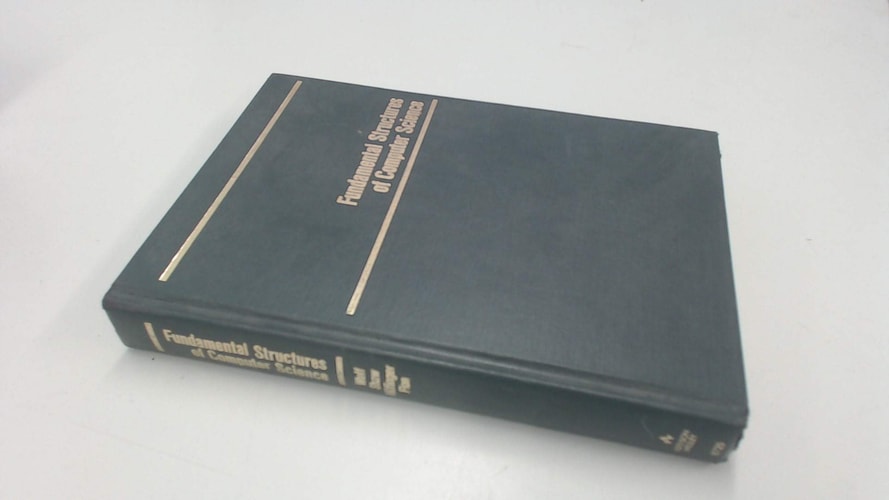
Fundamental Structures of Computer Science
0
0
As an Amazon Associate and affiliate partner, Menrva Books earns from qualifying purchases. Learn more
Author Description
In the preface this text is described as intended for an intermediate-level course in computer science Its purpose is to introduce the student "to the science that underlies good programming. While many programming courses teach only programming techniques, this book relates" programming ideas to the underlying mathematical concepts of automata, from languages, data types, and so on." The author believes that these concepts much be introduced much earlier in the curriculum so that the course could be a prerequisite for courses in software engineering and advanced computer science. The book concludes with a number of appendices concerned with teaching computer programming, like how to grade a student program by other criteria than just that it works.
Menrva's Summary
THE THESIS
This text investigates the core mathematical and logical principles that underpin effective computer programming, arguing that these concepts should be integrated into the curriculum earlier than traditional methods allow. The authors, a team of experienced computer scientists, utilize a structured pedagogical approach to bridge the gap between basic coding techniques and the abstract theories of automata and data types. By establishing this theoretical foundation, the book aims to prepare students for advanced study in software engineering and complex system design.
THE SCOPE MAP
What You Will Find
- Mathematical foundations of automata and formal languages
- Analysis of data types and their logical structures
- Methodologies for evaluating and grading student programming assignments
- Theoretical frameworks designed to support software engineering curricula
THE AUTHORITY PERSPECTIVE
Experts recognize this work as a foundational text for bridging the divide between practical coding and theoretical computer science. Readers frequently note the academic density of the prose, which is intended for intermediate-level students seeking a rigorous understanding of programming science.
Page Count:
621
Publication Date:
1980-01-01
Publisher:
Addison-Wesley
ISBN-10:
0201087251
ISBN-13:
9780201087253
Mathematics
textbook
Software Engineering
Computer Science
Programming
Community Tags
Similar Books