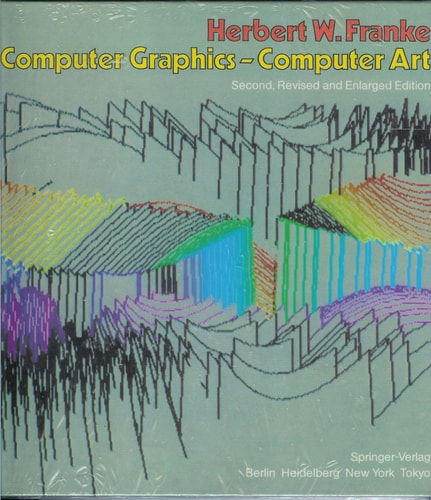
Computer Graphics-Computer Art
0
0
As an Amazon Associate and affiliate partner, Menrva Books earns from qualifying purchases. Learn more
Author Description
Ten years have passed since the first edition of this book, a time sary to stress that the availability of colors further assists artistic span during which all activities connected with computers have ambitions. experienced an enormous upswing, due in particular to the ad The dynamics of display which can be achieved on the screen is vances in the field of semiconductor electronics which facilitated also of significance for the visual arts. It is a necessary condition microminiaturization. With the circuit elements becoming small for some technical applications, for example when simulating er and smaller, i. e. the transition to integrated circuits, the price dynamic processes. Although the graphics systems operating in real time were not designed for artistic purposes, they nonethe of hardware was reduced to an amazingly low this has de less open the most exciting aspects to the visual arts. While the finitely been an impulse of great importance to the expansion of computer technology, as well as to areas far removed from tech static computer picture was still a realization in line with the nology. Stored ISBN-13: 9780387151496 | Stored ISBN-10: 0387151494 Stored publication date: 1985-01-01
Menrva's Summary
THE THESIS
This book investigates the evolving relationship between computer technology and artistic expression, particularly focusing on the advancements in computer graphics and their implications for visual arts. Herbert W. Franke, a pioneer in computer art, draws upon a decade of developments since the first edition, highlighting how semiconductor electronics and integrated circuits have drastically reduced hardware costs, thereby democratizing access to powerful computing tools. The text explores how real-time graphics systems, though not initially designed for art, have opened new avenues for visual creativity, emphasizing the significance of dynamic display capabilities on screens.
THE SCOPE MAP
- The impact of semiconductor electronics and microminiaturization on computer accessibility and cost.
- The role of integrated circuits in reducing hardware prices and expanding computer technology.
- The significance of real-time graphics systems and dynamic display capabilities for visual arts.
- The evolution of computer art from static images to dynamic, screen-based expressions.
- The influence of technological advancements on artistic ambitions and creative processes.
THE AUTHORITY PERSPECTIVE
This work is recognized for its early and insightful exploration of computer graphics as a medium for artistic creation. Franke's perspective, informed by a decade of rapid technological advancement, provides a foundational understanding of how computing power became accessible to artists. The book is noted for its forward-looking analysis of how technological progress, particularly in hardware, directly fuels artistic innovation and expands the possibilities of visual expression.
Page Count:
177
Publication Date:
1985-01-01
Publisher:
Springer Verlag
ISBN-10:
0387151494
ISBN-13:
9780387151496
Non-Fiction
Art
Science & Technology
Computer graphics
Technology
Computer art
Art History
Community Tags
Similar Books