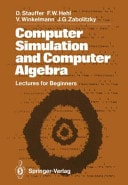
Computer Simulation and Computer Algebra
0
0
As an Amazon Associate and affiliate partner, Menrva Books earns from qualifying purchases. Learn more
Author Description
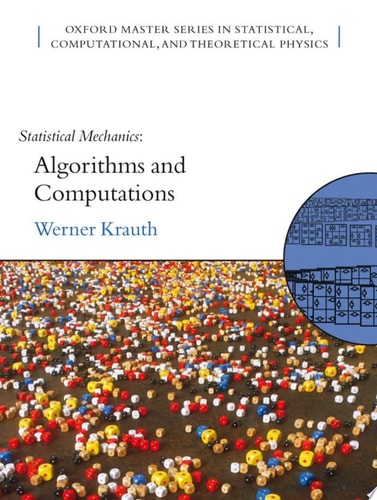
This text is based on the authors' broad experience in teaching the application of computers to physics. It takes the reader from the introductory simulation of classical mechanical problems (part one) to current research in statistical physics. The Ising model, cellular automata, percolation, Eden clusters and the Kauffman model are presented with exercises and programs for hands-on use with the aim of enabling and encouraging the student to write her/his own programs. The third part gives a detailed course into algebraic formula manipulation using the computer algebra system REDUCE, again with numerous examples and exercises. These "lectures for beginners" do not require any previous knowledge of computer languages, but a brief introduction to FORTRAN and BASIC can be found in the appendix.
Menrva's Summary
THE THESIS
This text bridges the gap between introductory computer simulations and advanced research in statistical physics, while also providing a comprehensive introduction to computer algebra. The authors, drawing on extensive teaching experience, guide readers from simulating classical mechanical problems to exploring current research frontiers. The book emphasizes hands-on learning with exercises and programs for models like the Ising model, cellular automata, and percolation, aiming to empower students to develop their own code. A significant portion is dedicated to algebraic formula manipulation using the REDUCE system, offering a detailed course with practical examples and exercises, all without requiring prior programming language knowledge.
THE SCOPE MAP
- Introduction to computer simulation of classical mechanical problems.
- Exploration of current research in statistical physics.
- Detailed presentation of the Ising model, cellular automata, percolation, Eden clusters, and the Kauffman model.
- Inclusion of exercises and programs for hands-on student use.
- Comprehensive course on algebraic formula manipulation using the computer algebra system REDUCE.
- Numerous examples and exercises for algebraic manipulation.
- Appendices providing a brief introduction to FORTRAN and BASIC programming languages.
THE AUTHORITY PERSPECTIVE
The book is structured as a series of lectures for beginners, designed to enable students to write their own programs through practical application. Its approach suggests a pedagogical focus, aiming to build foundational skills in computational physics and computer algebra. The inclusion of introductory programming languages in the appendix indicates an effort to make the material accessible to those without prior coding experience. The content covers a range of simulation models and algebraic manipulation techniques, pointing towards a comprehensive resource for students entering these fields.
Page Count:
170
Publication Date:
1988-07-29
Publisher:
Springer My Copy UK
ISBN-10:
3642970923
ISBN-13:
9783642970924
Science
Non-Fiction
Computational Physics
Physics
Computer Science
Algebra
Scientific Computing
Community Tags
Similar Books