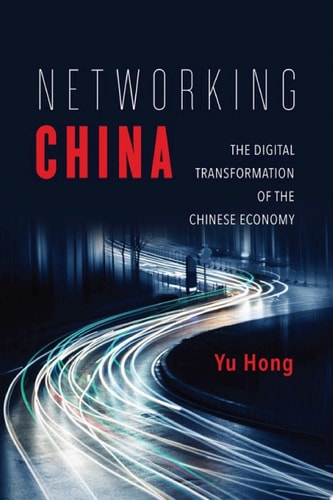
Networking China
0
0
As an Amazon Associate and affiliate partner, Menrva Books earns from qualifying purchases. Learn more
Author Description
In recent years, China 's leaders have taken decisive action to transform information, communications, and technology (ICT) into the nation's next pillar industry. In Networking China, Yu Hong offers an overdue examination of that burgeoning sector's political economy. Hong focuses on how the state, in conjunction with market forces and class interests, is constructing and realigning its digitalized sector. State planners intend to build a more competitive ICT sector by modernizing the network infrastructure, corporatizing media-and-entertainment institutions, and by using ICT as a crosscutting catalyst for innovation, industrial modernization, and export upgrades. The goal: to end China's industrial and technological dependence upon foreign corporations while transforming itself into a global ICT leader. The project, though bright with possibilities, unleashes implications rife with contradiction and surprise. Hong analyzes the central role of information, communications, and culture in Chinese-style capitalism. She also argues that the state and elites have failed to challenge entrenched interests or redistribute power and resources, as promised. Instead, they prioritize information, communications, and culture as technological fixes to make pragmatic tradeoffs between economic growth and social justice.
Menrva's Summary
THE THESIS
The Chinese state is actively reshaping its Information, Communications, and Technology (ICT) sector into a primary national industry. Yu Hong's analysis examines the political economy of this transformation, detailing how state planners, market forces, and class interests converge to construct and realign China's digital infrastructure. The book explores the state's strategy of modernizing networks, corporatizing media, and leveraging ICT for innovation and export growth, aiming to achieve technological independence and global leadership. However, this ambitious project is fraught with contradictions, as the state and elites prioritize technological solutions over challenging entrenched interests or redistributing power and resources, leading to pragmatic tradeoffs between economic growth and social justice.
THE SCOPE MAP
- An examination of the political economy of China's ICT sector transformation.
- Analysis of the state's strategy involving infrastructure modernization, media corporatization, and ICT as a catalyst for innovation.
- Exploration of the goal to achieve technological independence and global ICT leadership.
- Discussion of the contradictions and surprises arising from this project.
- An analysis of the central role of information, communications, and culture in Chinese-style capitalism.
- An argument regarding the state and elites' failure to challenge entrenched interests or redistribute power and resources.
THE AUTHORITY PERSPECTIVE
The book is recognized for its overdue examination of China's burgeoning ICT sector and its political economy. It delves into the complex interplay between state planning, market forces, and class interests in shaping the nation's digital landscape. The analysis highlights the state's strategic objectives for modernization and global leadership, while also critically assessing the inherent contradictions and the prioritization of technological fixes over social justice. The work is noted for its argument that entrenched interests remain unchallenged and power is not effectively redistributed.
Page Count:
232
Publication Date:
2017-01-11
Publisher:
University of Illinois Press
ISBN-10:
0252099435
ISBN-13:
9780252099434
Economics
Business
Non-Fiction
Politics
Social Science
Technology
Community Tags
Similar Books