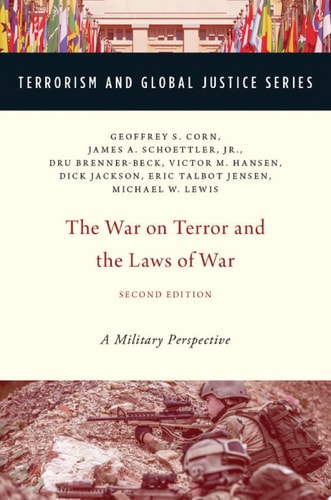
The War on Terror and the Laws of War
0
0
As an Amazon Associate and affiliate partner, Menrva Books earns from qualifying purchases. Learn more
Author Description
Many Years After The United States Initiated A Military Response To The Terrorist Attacks Of September 11th, 2001, The Nation Continues To Prosecute What It Considers An Armed Conflict Against Transnational Terrorist Groups. Understanding How The Law Of Armed Conflict Applies To And Regulates Military Operations Executed Within The Scope Of This Armed Conflict Against Transnational Non-state Terrorist Groups Is As Important Today As It Was In September 2001. In The War On Terror And The Laws Of War Seven Legal Scholars, Each With Experience As Military Officers, Focus On How To Strike An Effective Balance Between The Necessity Of Using Armed Violence To Subdue A Threat To The Nation With The Humanitarian Interest Of Mitigating The Suffering Inevitably Associated With The Use. Each Chapter Addresses A Specific Operational Issue, Including The National Right Of Self-defense, Military Targeting And The Use Of Drones, Detention, Interrogation, Trial By Military Commission Of Captured Terrorist Operatives, And The Impact Of Battlefield Perspectives On Counter-terror Military Operations, While Illustrating How The Law Of Armed Conflict Influences Resolution Of That Issue. This Second Edition Carries On The Critical Mission Of Continuing The Ongoing Dialogue About The Law From An Unabashedly Military Perspective, Bringing Practical Wisdom To The Contentious Topic Of Applying International Law To The Battlefield.
Menrva's Summary
THE THESIS
This text investigates how the Law of Armed Conflict regulates military operations conducted against transnational non-state terrorist groups in the post-9/11 era. The authors, a group of seven legal scholars who possess extensive backgrounds as military officers, provide a framework for balancing the necessity of armed force against the humanitarian imperative to minimize suffering. They argue that applying traditional international law to modern, unconventional conflicts requires a nuanced understanding of both operational reality and legal theory.
THE SCOPE MAP
What You Will Find
- Analysis of the national right of self-defense in the context of non-state actors.
- Legal frameworks governing military targeting and the deployment of unmanned aerial vehicles.
- Examination of detention, interrogation, and the use of military commissions for captured operatives.
- Discussion on how battlefield perspectives influence counter-terror operations.
Scope Limits
- The text focuses primarily on the United States military perspective and its interpretation of international law.
- It does not provide a comprehensive history of the War on Terror beyond its legal and operational implications.
THE AUTHORITY PERSPECTIVE
Legal scholars and military practitioners frequently cite this work as a foundational text for understanding the intersection of international law and modern counter-terrorism operations. Readers often note the academic density of the prose, which is balanced by the authors' practical experience as former military officers.
Page Count:
277
Publication Date:
2014-01-01
Publisher:
Oxford University Press
ISBN-10:
0190221380
ISBN-13:
9780190221386
Law
Military History
Terrorism
International relations
Community Tags
Similar Books