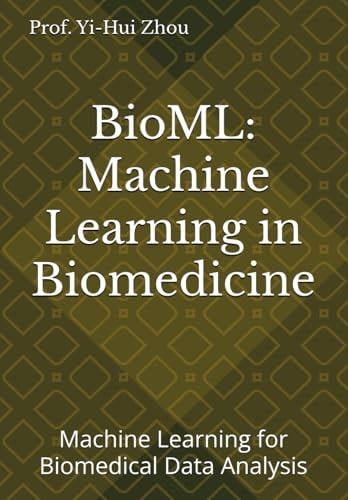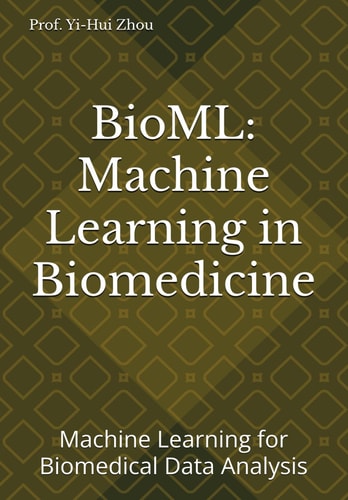
BioML: Machine Learning in Biomedicine: Machine Learning for Biomedical Data Analysis
0
0
As an Amazon Associate and affiliate partner, Menrva Books earns from qualifying purchases. Learn more
Author Description
In recent years, the field of biomedicine has witnessed an explosion of data, encompassing diverse domains such as genomics, microbiome analysis, and single-cell RNA-Seq. As researchers delve deeper into these datasets, it becomes increasingly evident that traditional analytical methods are inadequate for fully harnessing their insights. Machine learning techniques offer a powerful solution, providing the means to extract meaningful patterns, identify novel biomarkers, and predict disease outcomes. This textbook aims to bridge the gap between machine learning and biology, empowering students to navigate this exciting realm. This textbook equips students with essential knowledge and practical skills to apply machine learning to biomedical data. Through real-world examples, readers will learn to address challenges such as preprocessing, model selection, and performance evaluation, building interpretable models for research and healthcare.
Menrva's Summary
THE THESIS
This textbook addresses the challenge of extracting meaningful insights from the explosion of biomedical data using machine learning techniques. As fields like genomics, microbiome analysis, and single-cell RNA-Seq generate vast datasets, traditional analytical methods fall short. Machine learning offers a powerful approach to identify patterns, discover biomarkers, and predict disease outcomes, bridging the gap between computational methods and biological understanding. This text equips students with the knowledge and practical skills to apply these techniques to real-world biomedical data, covering preprocessing, model selection, and performance evaluation for research and healthcare applications.
THE SCOPE MAP
- Covers diverse biomedical data domains including genomics, microbiome analysis, and single-cell RNA-Seq.
- Explains the inadequacy of traditional analytical methods for modern biomedical datasets.
- Details the application of machine learning for pattern extraction and biomarker identification.
- Provides methods for predicting disease outcomes using machine learning models.
- Guides students through preprocessing, model selection, and performance evaluation.
- Focuses on building interpretable models for research and clinical practice.
- Includes real-world examples to illustrate practical application.
THE AUTHORITY PERSPECTIVE
The subject matter suggests this textbook is aimed at students and researchers seeking to apply computational methods to complex biological data. The focus on practical application and interpretable models indicates an intention to bridge theoretical knowledge with real-world utility in both research and healthcare settings. The inclusion of diverse data types points to a comprehensive overview of current challenges and solutions in the field. Its structured approach, from data preprocessing to model evaluation, implies a pedagogical design intended to build foundational expertise.
Page Count:
480
Publication Date:
2025-08-15
Publisher:
Independently published
ISBN-13:
9798286276936
Science
Science & Technology
Non-Fiction
Healthcare
Biomarkers
Genomics
Machine Learning