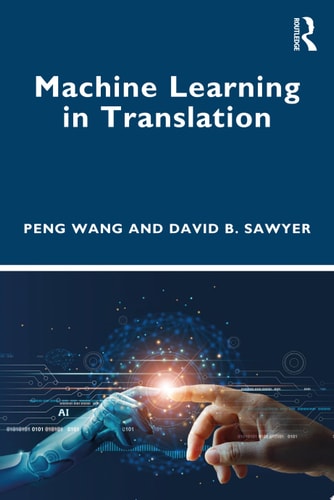
Machine Learning in Translation
0
0
As an Amazon Associate and affiliate partner, Menrva Books earns from qualifying purchases. Learn more
Author Description
Machine Learning in Translation introduces machine learning (ML) theories and technologies that are most relevant to translation processes, approaching the topic from a human perspective and emphasizing that ML and ML-driven technologies are tools for humans. Providing an exploration of the common ground between human and machine learning and of the nature of translation that leverages this new dimension, this book helps linguists, translators, and localizers better find their added value in a ML-driven translation environment. Part One explores how humans and machines approach the problem of translation in their own particular ways, in terms of word embeddings, chunking of larger meaning units, and prediction in translation based upon the broader context. Part Two introduces key tasks, including machine translation, translation quality assessment and quality estimation, and other Natural Language Processing (NLP) tasks in translation. Part Three focuses on the role of data in both human and machine learning processes. It proposes that a translator’s unique value lies in the capability to create, manage, and leverage language data in different ML tasks in the translation process. It outlines new knowledge and skills that need to be incorporated into traditional translation education in the machine learning era. The book concludes with a discussion of human-centered machine learning in translation, stressing the need to empower translators with ML knowledge, through communication with ML users, developers, and programmers, and with opportunities for continuous learning. This accessible guide is designed for current and future users of ML technologies in localization workflows, including students on courses in translation and localization, language technology, and related areas. It supports the professional development of translation practitioners, so that they can fully utilize ML technologies and design their own human-centered ML-driven transl
Menrva's Summary
THE THESIS
This book investigates how machine learning (ML) theories and technologies can be integrated into translation processes, focusing on their role as tools for human translators. It explores the commonalities between human and machine learning, examining how translation leverages this new dimension to help linguists, translators, and localizers identify their unique value in an ML-driven environment. The text is structured into three parts: Part One contrasts human and machine approaches to translation, including word embeddings, meaning unit chunking, and contextual prediction. Part Two details key ML tasks relevant to translation, such as machine translation, quality assessment, and other Natural Language Processing (NLP) applications. Part Three emphasizes the critical role of data in both human and machine learning, proposing that translators' value lies in their ability to create, manage, and utilize language data within ML tasks, and outlines necessary updates to translation education.
THE SCOPE MAP
- Exploration of human vs. machine learning approaches to translation.
- Detailed examination of word embeddings, meaning unit chunking, and contextual prediction in translation.
- Introduction to key ML tasks in translation: machine translation, translation quality assessment, and quality estimation.
- Discussion of other Natural Language Processing (NLP) tasks relevant to translation.
- Analysis of the role of data in both human and machine learning processes.
- Identification of translators' unique value in creating, managing, and leveraging language data.
- Recommendations for updating translation education to incorporate ML knowledge.
- Focus on human-centered machine learning in translation and continuous learning opportunities.
THE AUTHORITY PERSPECTIVE
The book is positioned as an accessible guide for current and future users of ML technologies in localization workflows, including students and professional practitioners. It aims to empower translators with ML knowledge by fostering communication with ML users, developers, and programmers. The content suggests a focus on practical application and professional development within the evolving landscape of translation technology.
Page Count:
218
Publication Date:
2023-04-12
Publisher:
Taylor & Francis
ISBN-10:
100083865X
ISBN-13:
9781000838657
Science & Technology
Non-Fiction
Machine Learning
Computational linguistics
Translation Studies
Community Tags
Other Editions(2)
Similar Books
Reader Comments
Share Your Thoughts
No comments yet. Be the first to share your thoughts!