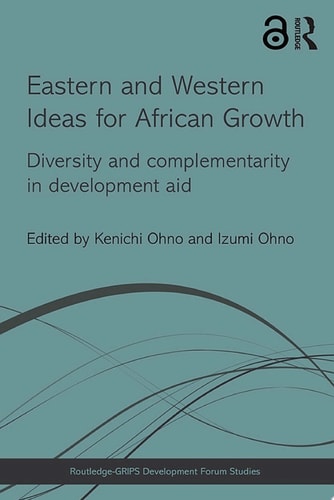
Eastern and Western Ideas for African Growth Diversity and Complementarity in Development Aid
0
0
As an Amazon Associate and affiliate partner, Menrva Books earns from qualifying purchases. Learn more
Author Description
The West and the East approach economic development differently. The Europeans and Americans stress free and fair business climate, promoting private activities generally without picking winners, and improving governance. East Asia is interested in achieving concrete results and projects rather than formal correctness, prioritizing a few sectors for industrialization, and eventual graduation from aid. The West mostly shapes shifting strategies of the international donor community while the East has in reality made remarkable progress in industrial catch-up. The two approaches cannot be merged easily but they can be used in proper combination to realize growth and economic transformation. This book proposes more dialogue and complementarity between the two in the development effort of Africa and other regions. In this collected volume, contributed by experts and practitioners from both East and West, the need to introduce Eastern ideas to the global development strategy is emphasized. Analysis of British and other Western donor policies is given while Japanese, Korean, and other Asian approaches are also explained with concrete examples. The concept of governance for growth is presented and the impact of rising China on development studies is contemplated. The practices of industrial policy dialogues and actions assisted by East Asian experts are reported from Tunisia, Zambia, Ethiopia, Rwanda, and others. The book should be applicable to all donors, institutions, NGOs and business enterprises engaged in development cooperation.
Menrva's Summary
THE THESIS
The central question this book addresses is how to best foster economic growth and transformation in Africa by integrating diverse development aid strategies. The authors, Izumi Ohno and Kenichi Ohno, along with a team of experts, explore the contrasting approaches of Western (European and American) and Eastern (East Asian) development aid. While Western models emphasize free markets and governance, Eastern models prioritize concrete results and sector-specific industrialization. This book argues that a combination of these complementary strategies, rather than a forced merger, can lead to more effective development outcomes for African nations and other regions.
THE SCOPE MAP
- Comparative analysis of Western (e.g., British) and East Asian (e.g., Japanese, Korean) development aid policies and practices.
- Case studies of industrial policy dialogues and actions assisted by East Asian experts in Tunisia, Zambia, Ethiopia, and Rwanda.
- Discussion on the concept of 'governance for growth' and its application in different development contexts.
- Examination of the impact of China's rise on development studies and aid strategies.
- Proposals for increased dialogue and complementarity between Eastern and Western development approaches.
- Insights from experts and practitioners on achieving concrete results and industrial catch-up.
THE AUTHORITY PERSPECTIVE
The book is presented as a collection of expert contributions advocating for a more integrated approach to development aid in Africa. It highlights the practical successes of East Asian development models alongside established Western strategies, suggesting that complementarity is key to achieving growth and economic transformation. The analysis includes specific country examples and considers the evolving landscape of international development cooperation, including the influence of China. The work aims to be applicable to a wide range of development actors, including donors, institutions, NGOs, and businesses.
Page Count:
256
Publication Date:
2013-05-29
Publisher:
Routledge
ISBN-10:
1136778799
ISBN-13:
9781136778797
Politics
Economics
Non-Fiction
International relations
Policy
Foreign Aid
Community Tags
Similar Books