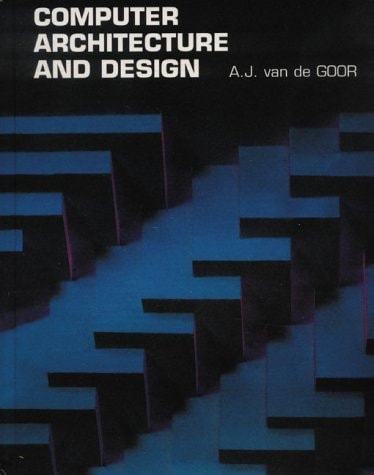
Computer Architecture and Design
0
0
As an Amazon Associate and affiliate partner, Menrva Books earns from qualifying purchases. Learn more
Author Description
The aim of this text is to provide a foundation for understanding, evaluating and comparing the design principles incorporated in widely-used, state-of-the-art microprocessors and minicomputers. Practical examples are drawn primarily from the Motorola MC68000 family, but also from the DEC VAX-11 and other architectures, enabling students to understand real designs and the trade-off between speed, memory, and cost. Programming examples are mainly given using the Pascal language. Excellent coverage is given of the operating system interface and of RISC and multiprocessors. Some knowledge of programming languages and an understanding of computer hardware at an introductory level is required. Due to its flexible structure, the text can be used in courses with a variety of emphases.
Menrva's Summary
THE THESIS
This text investigates the fundamental design principles and architectural trade-offs inherent in modern microprocessors and minicomputers. Author A. J. Van De Goor utilizes his expertise in electronic systems engineering to provide a structured framework for evaluating hardware performance. By analyzing specific architectures like the Motorola MC68000 and DEC VAX-11, the book establishes a baseline for understanding the complex relationship between speed, memory capacity, and production cost in computing systems.
THE SCOPE MAP
What You Will Find
- Comparative analysis of microprocessor architectures including the Motorola MC68000 and DEC VAX-11.
- Technical examination of the trade-offs between system speed, memory management, and hardware cost.
- Practical programming examples implemented in the Pascal language.
- In-depth coverage of operating system interfaces, RISC architecture, and multiprocessor configurations.
THE AUTHORITY PERSPECTIVE
Experts identify this work as a foundational text for students transitioning from introductory hardware concepts to advanced system design. Readers frequently note the technical density of the prose, which requires a prerequisite understanding of programming and basic computer hardware to fully grasp the material.
Page Count:
633
Publication Date:
1989-01-01
Publisher:
Addison-Wesley Longman Ltd
ISBN-10:
0201182416
ISBN-13:
9780201182415
Hardware
Engineering
Computer Engineering
Computer Science
textbook
Community Tags
Similar Books