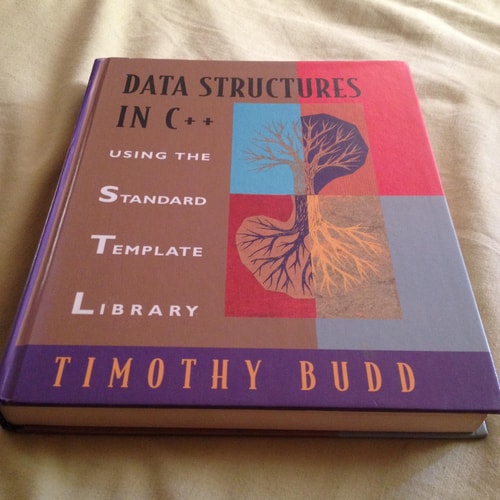
Data Structures in C++: Using the Standard Template Library (STL)
0
0
As an Amazon Associate and affiliate partner, Menrva Books earns from qualifying purchases. Learn more
Author Description
Timothy Budd takes an exciting new approach to teaching data structures by incorporating the power of the Standard Template Library (STL). This book represents a reversal of the traditional presentation. Before concentrating on writing programs, Dr. Budd emphasizes how to use a standard abstraction. Working with this standard library, students will master the fundamentals of data structures and learn the power of C++, allowing them to carry their knowledge to later courses and into their careers. While the major topics have remained similar to the author's earlier book, Classic Data Structures in C++, the implementations have been completely revised. Since data structures are assumed to exist in the programming environment from the start, the presence of the STL permits reordering of topics within each chapter. Data Structures in C++ Using the STL. begins each new data structure by describing a typical use of the data structure. Dr. Budd then typically gives an overview of all the operations of the data structure, and only lastly presents an implementation. The implementations are, in most cases, simplified from the standard library versions.Highlights Teaches data structures in the context of the C++ Standard Template Library Instructs the use of analysis techniques with which to evaluate algorithms Provides examples of modern software engineering principles and techniques, including object-oriented programming Introduces the proper use of various features of the C++ programming language
Menrva's Summary
THE THESIS
This book investigates how the integration of the Standard Template Library (STL) can modernize the teaching of data structures and algorithmic efficiency in C++. Timothy Budd, an experienced computer science educator, argues that students should first master existing abstractions before attempting to implement them from scratch. By utilizing the STL as a foundational tool, the text provides a framework that aligns academic study with contemporary software engineering practices and professional development requirements.
THE SCOPE MAP
What You Will Find
- Comprehensive instruction on utilizing the C++ Standard Template Library for data structure management.
- Analysis techniques for evaluating algorithmic complexity and performance.
- Practical examples demonstrating modern object-oriented programming principles.
- A pedagogical approach that prioritizes the use of standard abstractions before manual implementation.
THE AUTHORITY PERSPECTIVE
Experts recognize this text as a significant shift from traditional data structure pedagogy by prioritizing library usage over low-level implementation. Readers frequently note that the book serves as a bridge between academic theory and the practical application of C++ in professional environments.
Page Count:
576
Publication Date:
1997-08-30
Publisher:
Pearson
ISBN-10:
0201308797
ISBN-13:
9780201308792
Algorithms
Programming
Software Engineering
C++
Computer Science
Community Tags
Similar Books