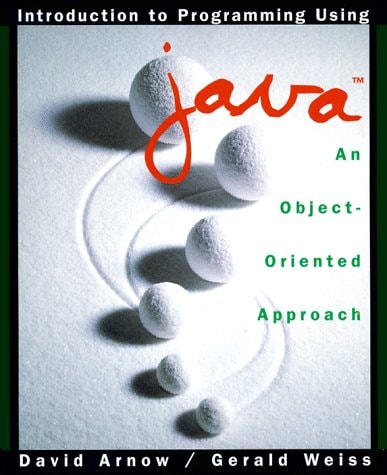
Introduction to Programming Using Java: An Object-Oriented Approach
0
0
As an Amazon Associate and affiliate partner, Menrva Books earns from qualifying purchases. Learn more
Author Description
Using the Java language, this book introduces the beginning computer science student to the concepts of class, object, and message in the first chapter. This object-oriented approach is used throughout the text, as students learn the fundamentals of object-oriented programming along with the basics of imperative programming. Because Java is an object-oriented language that reflects the acquired wisdom of thirty years of programming language design, the book can effectively focus on programming and the process of class design. Early on, a clear, usable procedure for solving problems by developing classes is presented and then used throughout the text. Java's support for GUI and network programming makes a great setting for diverse programming examples: a calculator, a strategy game, reading the Dow Jones from Yahoo!, a Web surveyor application, scheduling songs for a rock-and-roll radio station, as well as traditional payroll and student GPA computations. Working with these and other examples, students learn to think like a programmer, analyze problems, devise solutions, design classes, and write code.Features Uses object-oriented concepts from the very beginning--classes, objects, and messages are all introduced in Chapter 1--and develops them throughout. Applies a consistent class design procedure, usable by beginners. Contains graphic user interface (GUI) supplements in each chapter. Provides an early introduction to testing, covering test drivers, debugging, and test case selection. Includes a chapter with three robust applications--a LOGO turtle, a Web surveyor, and Mancala (a strategy game)--which use the text's class design procedure and allow the students to tie the material together.
Menrva's Summary
THE THESIS
This text investigates how to effectively teach computer science fundamentals by prioritizing an object-oriented approach from the very first chapter. David M. Arnow utilizes his pedagogical experience to structure a curriculum that integrates imperative programming basics with the design of classes, objects, and messages. By leveraging Java as the primary language, the author provides a framework that mirrors modern software engineering practices, ensuring students learn to analyze problems and devise solutions through consistent design procedures.
THE SCOPE MAP
What You Will Find
- Comprehensive introduction to class design, objects, and message passing
- Practical application of GUI and network programming within Java
- Systematic methodology for problem-solving and debugging
- Diverse case studies including calculators, strategy games, and web-based applications
THE AUTHORITY PERSPECTIVE
Educators and students frequently note the text's consistent application of object-oriented principles, which helps beginners avoid common pitfalls in early programming. The inclusion of robust, real-world examples is often cited as a key factor in bridging the gap between theoretical concepts and functional code development.
Page Count:
783
Publication Date:
1998-01-01
Publisher:
Addison-Wesley
ISBN-10:
0201311844
ISBN-13:
9780201311846
Programming
Education
Java
textbook
Computer Science
Community Tags
Similar Books