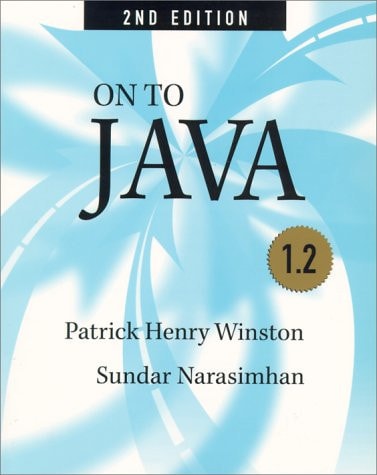
On to Java 1.2
0
0
As an Amazon Associate and affiliate partner, Menrva Books earns from qualifying purchases. Learn more
Author Description
This book is written in the clear and concise style that has made Winston's C, C++, Smalltalk, and Lisp books popular among programmers who want to add new languages to their repertoires. Using this book, you learn Java quickly and effectively, and you learn why Java is the language of choice for writing programs for the World Wide Web.The Knowledge You NeedEach section add new capabilities to a short, yet representative Java program. One such program displays the rating of a movie selected by a user, along with a movie poster. Any World-Wide-Web browser can fetch and run the program, on your computer, in response to a button click.As you see the program evolve, you learn todesign class hierarchiesimpose requirements using interfacesfollow the model-view approach to interface designaccess applets from network viewersuse threads to implement dynamic applets and you learn toexploit the features of Java 1.2 to access files via resourcesexploit swing classesdraw using the Graphics2D classgenerate Java beans for GUI buildersand much, much more.Winston's proven approach Based on extensive teaching experience Features easily digested segments Illustrates ideas via short, yet complete programs Answers your natural questions in a natural order Stresses principles of good-programming practice Recapitulates key points as if--then rules
Menrva's Summary
THE THESIS
This book investigates the core principles and practical application of the Java 1.2 programming language for web-based software development. Patrick H. Winston, an experienced educator in computer science, utilizes a pedagogical framework that builds complexity through iterative program development. By focusing on representative code samples, the text argues that programmers can master new languages by observing how individual features integrate into functional, web-ready applications.
THE SCOPE MAP
What You Will Find
- Comprehensive coverage of Java 1.2 features including Swing classes and Graphics2D.
- Methodologies for designing class hierarchies and implementing interface requirements.
- Practical instruction on the model-view approach to interface design.
- Techniques for utilizing threads in dynamic applets and generating Java beans for GUI builders.
THE AUTHORITY PERSPECTIVE
Experts recognize this text as a highly structured resource for programmers transitioning to the Java ecosystem. Readers frequently note the clarity of the instructional approach, which prioritizes logical progression and the reinforcement of good programming practices through concise, modular examples.
Page Count:
379
Publication Date:
1998-01-01
Publisher:
Addison-Wesley
ISBN-10:
0201385988
ISBN-13:
9780201385984
Computer Science
Java
Programming
Reference
Community Tags
Similar Books