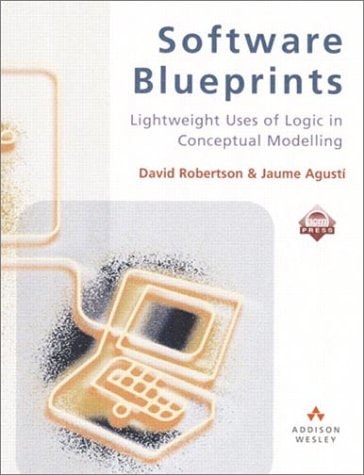
Software Blueprints: Lightweight Uses of Logic in Conceptual Modelling
0
0
As an Amazon Associate and affiliate partner, Menrva Books earns from qualifying purchases. Learn more
Author Description
Conceptual models are descriptions of our ideas about a problem, used to shape the implementation of a solution to it. Everyone who builds complex information systems uses such models - be they requirements analysts, knowledge modellers or software designers - but understanding of the pragmatics of model design tends to be informal and parochial. Lightweight uses of logic can add precision without destroying the intuitions we use to interpret our descriptions. Computing with logic allows us to make use of this precision in providing automated support tools. Modern information scientists need to know what these methods are for and may need to build their own. This book gives you a place to begin.Where do you start when building models in a precise language like logic? One way is by following standard paradigms for design and adapting these to your needs. Some of these come from an analysis of existing informal notations. Others are from within logic itself. We take you through a sample of these, from more commonplace styles of formal modelling to non-standard methods such as techniques editing and argumentation. Each of these provides a window onto broader areas of applied logic and gives you a basis for adapting the method to your own needs.Features:- Associated web site with detailed supplementary material and links. - Numerous examples from different methodological disciplines. - End of chapter exercises to aid understanding. - Navigational icons in the margins to help guide the reader through the material.
Menrva's Summary
THE THESIS
This book investigates how lightweight applications of formal logic can enhance the precision of conceptual modeling in software and information system design without sacrificing intuitive clarity. The authors, David Robertson and Jaume Agusti I Cullell, address the gap between informal modeling practices and rigid formal methods. They provide a framework for information scientists to adopt and adapt logical paradigms, enabling the creation of automated support tools for complex system development.
THE SCOPE MAP
What You Will Find
- Methodologies for translating informal conceptual notations into precise logical structures.
- Techniques for non-standard modeling, including argumentation and editing methods.
- Practical examples drawn from diverse methodological disciplines in information science.
- Pedagogical tools including end-of-chapter exercises and supplementary web-based resources.
THE AUTHORITY PERSPECTIVE
Experts identify this text as a practical entry point for professionals and students looking to bridge the gap between abstract logic and applied software design. Readers frequently note the balance between theoretical foundations and the actionable, modular approach to building custom modeling tools.
Page Count:
240
Publication Date:
1999-01-01
Publisher:
Addison-Wesley
ISBN-10:
0201398192
ISBN-13:
9780201398199
Information Systems
Logic
Computer Science
Software Engineering
System Design
Community Tags
Similar Books