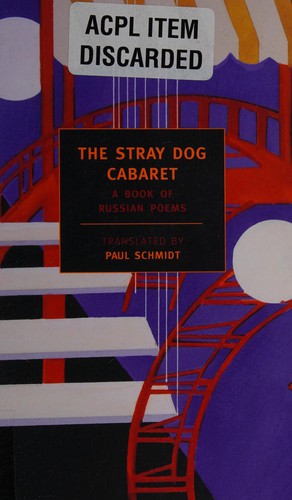
The Stray Dog Cabaret
0
0
As an Amazon Associate and affiliate partner, Menrva Books earns from qualifying purchases. Learn more
Author Description
"In the years before the 1917 Russian Revolution, the Stray Dog cabaret in St. Petersburg was the haunt of poets, artists, and musicians, a place to meet, drink, read, brawl, celebrate, and stage performances of all kinds. It has since become a symbol of the extraordinary literary ferment of that time. It was then that Alexander Blok composed his apocalyptic sequence "Twelve"; that the futurists Velimir Khlebnikov and Vladimir Mayakovsky exploded language into bold new forms; that the lapidary lyrics of Osip Mandelstam and plangent love poems of Anna Akhmatova saw the light; that the electrifying Marina Tsvetaeva stunned and dazzled everyone. Boris Pasternak was also of this company, putting together his great youthful hymn to nature, My Sister, Life." "It was a transforming moment - not just for Russian but for world poetry - and a short-lived one. Within little more than a decade, revolution and terror were to disperse, silence, and destroy almost all the poets of the Stray Dog cabaret."--Jacket.
Menrva's Summary
THE THESIS
The Stray Dog cabaret served as a vibrant nexus for Russia's avant-garde literary scene in the tumultuous years preceding the 1917 Revolution. This St. Petersburg venue was a crucible for poets, artists, and musicians, fostering an environment of intense creative exchange, performance, and even brawls. It was within these walls that seminal works by luminaries such as Alexander Blok, Velimir Khlebnikov, Vladimir Mayakovsky, Osip Mandelstam, Anna Akhmatova, Marina Tsvetaeva, and Boris Pasternak took shape. The book chronicles this extraordinary, yet tragically short-lived, period of poetic innovation that profoundly impacted both Russian and world literature before being extinguished by revolution and terror.
THE SCOPE MAP
- Exploration of the Stray Dog cabaret as a physical and symbolic space for artistic creation.
- Detailed accounts of the key poets and musicians who frequented the cabaret.
- Analysis of the literary movements and innovations that emerged from this environment, including Futurism.
- Contextualization of the cabaret's activities within the broader socio-political landscape of pre-revolutionary Russia.
- Discussion of the impact of the 1917 Revolution and subsequent terror on the lives and works of the artists.
- Examination of the legacy of the Stray Dog cabaret and its associated poets on world poetry.
- Inclusion of specific poetic sequences and lyrical works composed during this era.
THE AUTHORITY PERSPECTIVE
The book is recognized for its detailed exploration of a pivotal moment in literary history, focusing on the Stray Dog cabaret as a symbol of pre-revolutionary Russian artistic ferment. It highlights the contributions of major poets like Blok, Mayakovsky, and Akhmatova, contextualizing their work within the venue's dynamic atmosphere. The narrative effectively captures the intensity and eventual tragic dispersal of this creative community. The work is appreciated for its scholarly yet engaging portrayal of a unique cultural epoch.
Page Count:
168
Publication Date:
2006-01-01
ISBN-10:
1590171918
ISBN-13:
9781590171912
History
Poetry
Non-Fiction
Literary History
Community Tags
Similar Books