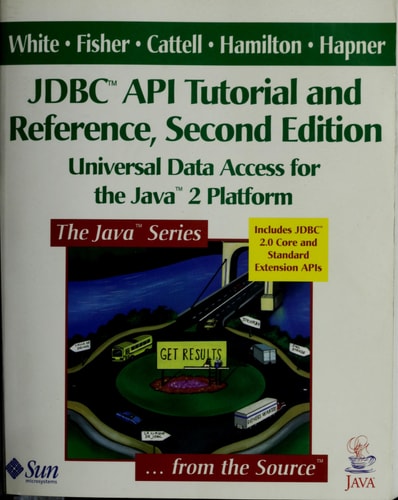
JDBC API Tutorial and Reference: Universal Data Access for the Java 2 Platform
0
0
As an Amazon Associate and affiliate partner, Menrva Books earns from qualifying purchases. Learn more
Author Description
This book provides the definitive description of the JDBC API, the technology that enables universal data access for the Java programming language. This new edition has been updated and expanded to cover all of the JDBC 2.0 API, including the JDBC 2.0 core API and the JDBC Standard Extension API, the package that facilitates building server-side applications.Containing in-depth explanations that go beyond the specification, this complete resource pairs a step-by-step tutorial with a comprehensive reference to all of the classes and interfaces.For those new to Java technology, this book includes an introduction to the Java programming language and to SQL. It builds on this basic knowledge to walk you through creating a JDBC application - from setting up a database and establishing a connection to retrieving values from result sets and using prepared statements. In addition, the authors provide many examples along the way that demonstrate how to execute common tasks. It then proceeds to more advanced topics, focusing on the new features of the JDBC 2.0 API, including scrollable and updatable result sets, batch updates, SQL3 data types, custom mapping, and more.
Menrva's Summary
THE THESIS
This book investigates the implementation and application of the JDBC API to facilitate universal data access within the Java 2 platform. The authors, a team of experts involved in the development of Java technology, provide a structured framework that bridges the gap between basic SQL knowledge and advanced server-side database integration. By combining technical specifications with practical implementation strategies, the text serves as a comprehensive guide for developers seeking to master data connectivity.
THE SCOPE MAP
What You Will Find
- Detailed coverage of the JDBC 2.0 core API and the JDBC Standard Extension API.
- Step-by-step tutorials for establishing database connections and executing SQL queries.
- Advanced techniques including scrollable result sets, batch updates, and custom data mapping.
- Foundational introductions to Java programming and SQL for developers new to the ecosystem.
THE AUTHORITY PERSPECTIVE
Experts recognize this work as a foundational resource for understanding the mechanics of Java database connectivity. Developers frequently note the clarity of the examples provided, which effectively translate complex API specifications into functional code.
Page Count:
1059
Publication Date:
1999-06-11
Publisher:
Pearson Education
ISBN-10:
0201433281
ISBN-13:
9780201433289
Programming
Reference
Computer Science
Java
Community Tags
Similar Books