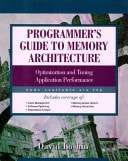
Programmer's Guide to Memory Architecture: Optimizing and Tuning Application Performance
0
0
As an Amazon Associate and affiliate partner, Menrva Books earns from qualifying purchases. Learn more
Author Description
As powerful new processors migrate to the desktop, all programmers need to have a good understanding of the relationship between the main processor and other levels of memory. Programmer's Guide to Memory Architecture examines the memory hierarchies and shows how to write programs that are optimized for fast memory access.
Menrva's Summary
THE THESIS
This book investigates the critical relationship between processor performance and memory hierarchy to enable developers to write more efficient code. David Loshin provides a technical framework for understanding how hardware architecture influences software execution, specifically focusing on the bottlenecks created by memory access patterns. By examining the interaction between CPUs and various levels of cache and main memory, the author offers strategies for developers to minimize latency and maximize throughput in high-performance applications.
THE SCOPE MAP
What You Will Find
- Analysis of memory hierarchy structures including L1, L2, and L3 caches.
- Methodologies for identifying and resolving memory-related performance bottlenecks.
- Technical explanations of processor-to-memory data transfer protocols.
- Optimization techniques for data structures and algorithms to improve cache locality.
THE AUTHORITY PERSPECTIVE
Experts identify this text as a foundational resource for systems programmers seeking to understand the hardware-software interface. Readers frequently note the technical density of the prose, which requires a solid background in computer architecture to fully implement the optimization strategies provided.
Page Count:
304
Publication Date:
1998-04-01
Publisher:
Addison-Wesley
ISBN-10:
0201442124
ISBN-13:
9780201442120
Software Engineering
Technical Reference
Programming
Computer Science
Community Tags
Similar Books