Breaking the Cycles of Hatred
0
0
As an Amazon Associate and affiliate partner, Menrva Books earns from qualifying purchases. Learn more
Author Description
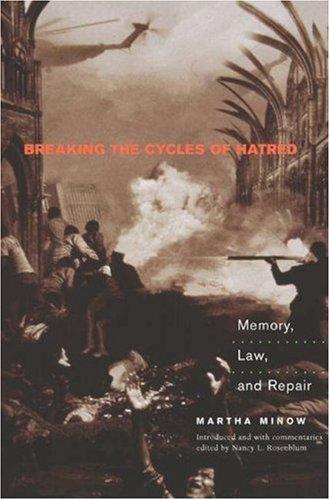
Violence so often begets violence. Victims respond with revenge only to inspire seemingly endless cycles of retaliation. Conflicts between nations, between ethnic groups, between strangers, and between family members differ in so many ways and yet often share this dynamic. In this powerful and timely book Martha Minow and others ask: What explains these cycles and what can break them? What lessons can we draw from one form of violence that might be relevant to other forms? Can legal responses to violence provide accountability but avoid escalating vengeance? If so, what kinds of legal institutions and practices can make a difference? What kinds risk failure? Breaking the Cycles of Hatred represents a unique blend of political and legal theory, one that focuses on the double-edged role of memory in fueling cycles of hatred and maintaining justice and personal integrity. Its centerpiece comprises three penetrating essays by Minow.^ She argues that innovative legal institutions and practices, such as truth commissions and civil damage actions against groups that sponsor hate, often work better than more conventional criminal proceedings and sanctions. Minow also calls for more sustained attention to the underlying dynamics of violence, the connections between intergroup and intrafamily violence, and the wide range of possible responses to violence beyond criminalization. A vibrant set of freestanding responses from experts in political theory, psychology, history, and law examines past and potential avenues for breaking cycles of violence and for deepening our capacity to avoid becoming what we hate. The topics include hate crimes and hate-crimes legislation, child sexual abuse and the statute of limitations, and the American kidnapping and internment of Japanese Latin Americans during World War II. Commissioned by Nancy Rosenblum, the essays are by Ross E. Cheit, Marc Galanter, Fredrick C.^ Harris, Judith Lewis Herman, Carey Jaros, Frederick M. Lawrence, Austin Sar
Menrva's Summary
THE THESIS
This book investigates the persistent nature of violence and hatred, exploring the dynamics that perpetuate cycles of retaliation and seeking pathways to break them. Martha Minow, alongside other experts, examines the common threads in conflicts ranging from international disputes to familial strife, questioning what drives these cycles and how they can be interrupted. The work delves into the dual role of memory in both fueling animosity and preserving justice, proposing that innovative legal institutions and practices, such as truth commissions and civil damage actions against groups sponsoring hate, may be more effective than traditional criminal proceedings. The book also emphasizes the need to understand the underlying dynamics of violence and the connections between different forms of conflict, advocating for a broader range of responses beyond mere criminalization.
THE SCOPE MAP
- Analysis of the cyclical nature of violence and retaliation across various conflict types (international, ethnic, familial).
- Exploration of the role of memory in perpetuating hatred and maintaining justice.
- Examination of innovative legal institutions and practices (e.g., truth commissions, civil damage actions) as alternatives to conventional criminal proceedings.
- Discussion on the connections between intergroup and intrafamily violence.
- Expert contributions on hate crimes, hate-crimes legislation, child sexual abuse statutes of limitations, and historical cases like the internment of Japanese Latin Americans.
- Focus on a wide range of possible responses to violence, moving beyond criminalization.
THE AUTHORITY PERSPECTIVE
The book is presented as a powerful and timely examination of violence and hatred, drawing on political and legal theory. It highlights Martha Minow's arguments for innovative legal approaches and a deeper understanding of violence dynamics. Expert contributions from various fields provide a broad perspective on breaking cycles of violence. The collection aims to deepen the reader's capacity to avoid perpetuating hatred.
Page Count:
264
Publication Date:
2002-01-01
ISBN-10:
0691096627
ISBN-13:
9780691096629
Crime
History
Psychology
Politics
Non-Fiction
Law
Community Tags
Similar Books