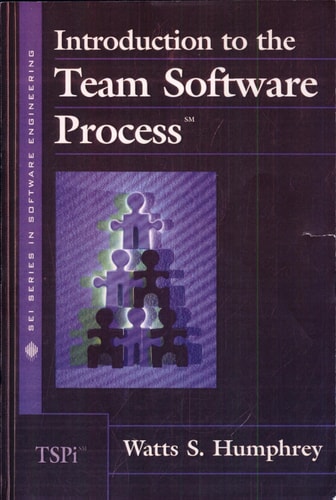
Introduction to the Team Software Process
0
0
As an Amazon Associate and affiliate partner, Menrva Books earns from qualifying purchases. Learn more
Author Description
Watts Humphrey is the visionary behind the Capability Maturity Model (CMM)(R) and the Personal Software Process (PSP) (sm). The CMM contains a framework for software process improvement at the organizational level. The PSP builds the self-discipline needed for individual programmers to work efficiently and effectively. The author's new Team Software Process (TSP) (sm) details methods to guide the formation of software development teams, to motivate their work, and to enhance their productivity.This book describes an introductory version of TSP, ideal for smaller projects but also useful for learning basic techniques and procedures that apply to other development projects. Methods presented include: how to establish roles; how to conceive, design, and plan a project; how to track and report on progress.The book walks readers through a complete development cycle, illustrating: how best to use the talents at hand; how to formulate well-defined goals; how to coordinate activities for maximum progress; how to promote effective communication; how to alleviate many of the conflicts that undermine teamwork.Team members should not have to expend valuable time and energy reinventing ways to organize and run their team. By following a proven process, the team will more quickly be able to focus on the successful completion of the project itself. To help a team course apply these methods, the book provides two project exercises, with prescribed development goals and team roles.
Menrva's Summary
THE THESIS
This book investigates how software development teams can improve their productivity and efficiency through the implementation of the Team Software Process (TSP). Watts S. Humphrey, a foundational figure in software process improvement and the creator of the Capability Maturity Model, leverages his extensive experience to provide a structured framework for team management. The text argues that by adopting standardized methods for planning, communication, and role definition, teams can minimize conflict and focus their energy on project completion. The author presents these concepts through a combination of theoretical guidance and practical, hands-on exercises designed for smaller development projects.
THE SCOPE MAP
What You Will Find
- A comprehensive framework for forming and managing software development teams.
- Methodologies for project design, planning, and progress tracking.
- Techniques for effective communication and conflict resolution within technical teams.
- Two structured project exercises with defined goals and role assignments for practical application.
THE AUTHORITY PERSPECTIVE
Experts recognize this work as a foundational text for understanding the transition from individual programming discipline to collaborative team environments. Readers frequently note that the prose is highly technical and procedural, making it most suitable for practitioners seeking to standardize their development workflows.
Page Count:
463
Publication Date:
1999-01-01
Publisher:
Addison-Wesley Professional
ISBN-10:
020147719X
ISBN-13:
9780201477191
Business
Computer software
Professional Development
Computer Science
Software Engineering
Community Tags
Similar Books