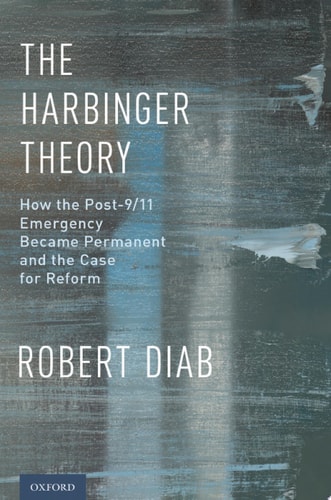
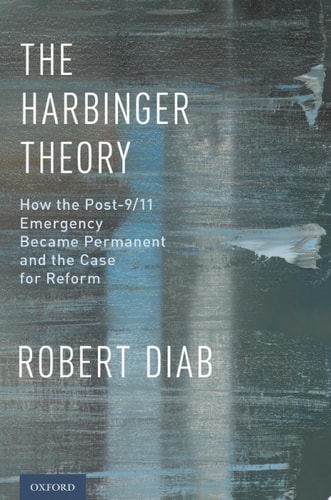
The Harbinger Theory
0
0
As an Amazon Associate and affiliate partner, Menrva Books earns from qualifying purchases. Learn more
Author Description
North American Law Has Been Transformed In Ways Unimaginable Before 9/11. Laws Now Authorize And Courts Have Condoned Indefinite Detention Without Charge Based On Secret Evidence, Mass Secret Surveillance, And Targeted Killing Of Us Citizens, Suggesting A Shift In The Cultural Currency Of A Liberal Form Of Legality To Authoritarian Legality. The Harbinger Theory Demonstrates That Extreme Measures Have Been Consistently Embraced In Politics, Scholarship, And Public Opinion, Not In Terms Of A General Fear Of The Greater Threat That Terrorism Now Poses, But A More Specific Belief That 9/11 Was The Harbinger Of A New Order Of Terror, Giving Rise To The Likelihood Of An Attack On The Same Scale As 9/11 Or Greater In The Near Future, Involving Thousands Of Casualties And Possibly Weapons Of Mass Destruction. It Explains How The Harbinger Theory Shapes Debates About Rights And Security By Virtue Of Rhetorical Strategies On The Part Of Political Leaders And Security Experts, And In Works Of Popular Culture, In Which The Theory Is Often Invoked As A Self-evident Truth, Without The Need For Supporting Evidence Or Authority. It Also Reveals How Liberal Advocates Tend To Be Deferential To The Theory, Aiding Its Deeper Entrenchment Through The Absence Of A Prominent Public Critique Of It. In A Unique Overview Of A Range Of Skeptical Evidence About The Likelihood Of Mass Terror Involving Wmd Or Conventional Means, This Book Contends That A Potentially More Effective Basis For Reform Advocacy Is Not To Dismiss Overstated Threat Claims As Implausible Or Psychologically Grounded, But To Challenge The Harbinger Theory Directly Through The Use Of Contrary Evidence.
Menrva's Summary
THE THESIS
The Harbinger Theory investigates how the belief that 9/11 signaled an inevitable future of catastrophic, large-scale terror attacks has fundamentally reshaped North American legal and political frameworks. Robert Diab, a legal scholar, examines how this specific rhetorical strategy has normalized authoritarian measures—such as indefinite detention and mass surveillance—by framing them as necessary responses to an existential, yet unproven, threat. The book argues that this theory functions as an unquestioned premise in public discourse, effectively silencing dissent and eroding traditional liberal legal protections.
THE SCOPE MAP
What You Will Find
- Analysis of post-9/11 legal shifts regarding detention, surveillance, and targeted killing.
- Examination of rhetorical strategies used by political leaders and security experts to justify extreme measures.
- A critical review of empirical evidence concerning the actual likelihood of mass-casualty terrorist attacks.
- Strategies for reform advocacy focused on challenging the underlying assumptions of the Harbinger Theory.
Scope Limits
- The book does not provide a comprehensive history of all counter-terrorism legislation since 2001.
- It does not focus on the psychological motivations of individual terrorists or the internal dynamics of specific extremist organizations.
THE AUTHORITY PERSPECTIVE
Legal scholars and political analysts frequently cite this work for its rigorous critique of how security narratives influence democratic institutions. Readers often note the academic density of the prose, which serves as a foundational text for those examining the intersection of civil liberties and national security policy.
Page Count:
256
Publication Date:
2015-01-01
Publisher:
Oxford University Press
ISBN-10:
0190243244
ISBN-13:
9780190243241
Terrorism
Sociology
National security
Public Policy
Law
Community Tags
Other Editions(2)
Similar Books